
How to Choose Rebar for Coastal Projects
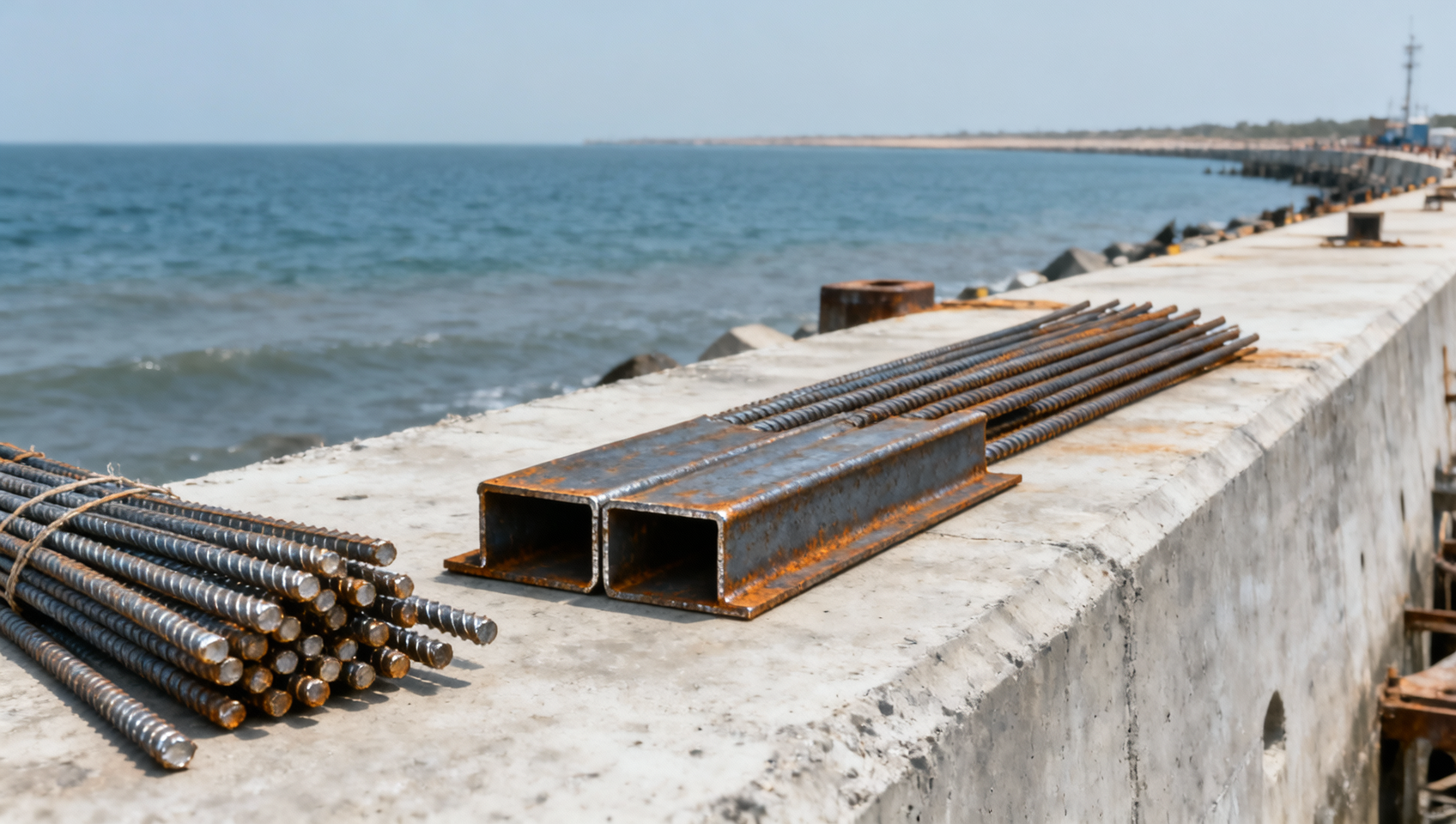
Selecting the right Rebar for coastal projects is critical to long-term durability, safety, and cost control. In marine and salt-laden environments, corrosion resistance, strength performance, and compatibility with structural materials such as Angle Steel can directly affect project life and maintenance needs. This guide explains the key factors buyers, engineers, and project managers should evaluate before choosing rebar for demanding coastal applications.
Why coastal projects need a different rebar selection strategy
Coastal construction faces a very different exposure profile from inland work. Rebar in marine zones is affected by chloride penetration, wet-dry cycling, wind-borne salt, and temperature fluctuation. These factors accelerate corrosion and shorten the service life of reinforced concrete if the wrong bar type, coating, or detailing method is used. For procurement teams and project managers, this means rebar selection is not only a material decision but also a lifecycle risk decision.
In many coastal projects, the target design life may range from 25 to 75 years depending on the asset type, maintenance strategy, and local regulations. A low initial purchase price can become expensive if corrosion causes concrete cracking, spalling, frequent inspection, or structural repair within the first 5 to 15 years. That is why coastal rebar evaluation should consider total ownership cost rather than only unit price per ton.
The steel and section industry also needs to think beyond the rebar itself. In marine structures, rebar may be used alongside Angle Steel, channels, plates, or embedded steel components. If adjacent materials have very different corrosion behavior, the whole structure can face uneven durability performance. Coordination between concrete cover, bar grade, fastening details, and connected steel sections is essential during design and purchasing.
For distributors, contractors, and end users, the practical question is simple: which rebar option matches the project’s exposure level, budget, installation method, and compliance needs? The answer usually depends on 4 core variables: environment severity, structural load demand, supply chain reliability, and planned maintenance interval.
Typical coastal exposure conditions to assess before buying
- Splash zone exposure, where repeated wetting and drying often creates the fastest chloride-driven corrosion risk.
- Atmospheric marine exposure, common in buildings and infrastructure within several hundred meters of the shoreline.
- Submerged or tidal service, where material choice may require stricter durability review and longer delivery planning.
- Contact with dissimilar steel components such as Angle Steel frames, brackets, or anchors that can affect maintenance strategy.
How to compare rebar options for marine and salt-laden environments
There is no single rebar type that suits every coastal project. Carbon steel rebar, epoxy-coated rebar, galvanized rebar, stainless steel rebar, and fiber-reinforced polymer alternatives all appear in coastal specifications, but each option has different trade-offs in cost, handling, repairability, and corrosion resistance. Buyers should compare them by exposure severity, expected service life, site handling conditions, and the level of quality control available during installation.
In moderate marine exposure, coated or galvanized rebar may be considered where concrete quality, cover depth, and workmanship are tightly controlled. In severe splash or tidal zones, stainless rebar is often evaluated because coating damage during transport, bending, or tying can reduce long-term durability. For some non-magnetic or special corrosion-sensitive zones, project engineers may explore alternative reinforcement systems, but these require careful compatibility review.
The comparison below is useful for information researchers, procurement officers, and engineering decision makers who need a practical screening view before asking for quotations or technical submittals. Final selection should always align with the project specification, structural design, and local construction standards.
This comparison shows why coastal rebar selection should not be treated as a simple grade substitution. A bar that looks economical in the purchase order may create hidden costs in inspection, repair, shutdown, or premature rehabilitation. For projects with 2 to 3 critical durability zones, it is often practical to use a mixed strategy rather than one material everywhere.
What decision makers should compare beyond corrosion resistance
Strength grade still matters. The rebar must meet the structural design load and detailing requirements, especially in seismic, high-wind, or heavy-load coastal infrastructure. However, grade alone does not solve durability. The best purchasing decisions combine mechanical performance, fabrication needs, and environmental suitability.
Key comparison points
- Expected delivery cycle, which may be around 7 to 15 days for common carbon steel bars but 2 to 6 weeks for special corrosion-resistant options.
- Fabrication impact, including bending radius, cut length control, and coating repair requirements after processing.
- Storage and site handling, especially where moisture, salt spray, and open-yard exposure can damage surface protection.
- Compatibility with anchors, couplers, mesh, and adjacent Angle Steel or embedded steel assemblies.
Which technical factors matter most when choosing rebar for coastal structures?
When engineers and buyers evaluate rebar for coastal projects, they should focus on a short list of technical factors that directly affect durability and constructability. In most cases, 5 key checks are enough to eliminate unsuitable options early: corrosion resistance, mechanical properties, concrete compatibility, fabrication tolerance, and traceable supply documentation.
Corrosion resistance is the first filter, but it must be read together with cover depth, concrete permeability, crack control, and joint detailing. A strong rebar solution can still fail early if the concrete mix allows fast chloride ingress or if exposed edges are poorly protected. This is why coastal buyers should request not only mill data for the bar, but also alignment with the concrete and detailing strategy.
Mechanical performance includes yield strength, tensile behavior, ductility, and bendability. In many projects, standard grades are sufficient, but in heavy civil applications the selected rebar must also support fabrication without coating failure or surface damage. Site teams need clear guidance on tying, lifting, cutting, and storage because damage during the first 48 to 72 hours on site can reduce expected service performance.
Another common oversight is interface compatibility. If rebar is connected to couplers, welded assemblies, or adjacent steel sections, the chosen material should be checked for galvanic considerations, coating continuity, and access for inspection. This is especially relevant when reinforced concrete connects to Angle Steel supports, marine brackets, or edge protection assemblies.
Technical review table for procurement and engineering teams
The following table can be used as a screening tool during supplier discussions, technical clarification, and project approval. It combines parameter review, selection logic, and coastal-use implications in one place.
A table like this helps cross-functional teams speak the same language. Procurement sees sourcing risk, engineers see performance risk, and project managers see schedule risk. In coastal jobs, those three risks often interact. A material that arrives late or needs re-fabrication can disrupt concreting sequences and raise total project cost.
Standards and compliance points worth checking
Exact standards depend on market and project specification, but buyers should confirm which material standard, coating standard, and testing requirements apply before placing an order. Internationally, projects often reference ASTM, BS, EN, ISO, or equivalent local standards for reinforcing steel and related inspection requirements. It is important to verify the current project documents rather than assume interchangeability.
For critical infrastructure, check whether the approval process includes 3 stages: pre-qualification, sample or documentation review, and incoming inspection. This reduces the chance of receiving rebar that meets nominal grade but not the corrosion or fabrication expectations of the job site.
How to balance cost, service life, and supply risk in rebar procurement
Cost is often the hardest part of coastal rebar selection because the cheapest option on paper may be the costliest over time. In steel and section procurement, a better method is to compare total project impact across 3 layers: initial material cost, installation and handling cost, and expected maintenance or replacement cost over the design period.
For example, stainless rebar may carry a significantly higher upfront price than conventional carbon steel, but in severe marine exposure it can reduce future intervention risk. By contrast, on a lower-risk coastal building set back from direct splash and combined with quality concrete cover, coated or galvanized options may offer a more balanced decision. The goal is not to buy the most advanced product everywhere, but to buy the right durability level where it matters most.
Supply risk also matters. Some projects require rebar in multiple diameters, custom cut-and-bend schedules, or mixed packages with Angle Steel and other structural steel products. If these items come from separate sources with mismatched lead times, the site may face delays of 1 to 3 weeks. Coordinated sourcing can reduce handling damage, simplify inspection, and improve installation flow.
For distributors and resellers, inventory strategy is another factor. Stocking only common carbon steel rebar may support volume sales, but coastal customers increasingly ask for corrosion-resistant solutions, test documents, and packaging suitable for outdoor transport. Product mix and service responsiveness can therefore influence conversion as much as base material pricing.
A practical 4-step procurement workflow
- Define the exposure zone and design life target. Separate splash, tidal, atmospheric, and sheltered areas instead of using one rebar type by default.
- Screen 2 to 4 material options by performance, delivery cycle, and compatibility with concrete and steel detailing.
- Confirm fabrication, packing, traceability, and inspection requirements before order release, especially for cut-and-bend or mixed shipments.
- Review lifecycle implications with engineering and maintenance teams so the selected rebar fits both budget and service expectations.
Common procurement mistakes in coastal rebar projects
- Selecting by price per ton only, without considering exposure severity or maintenance cost.
- Ignoring the risk of coating damage during cutting, bending, loading, and unloading.
- Failing to coordinate rebar with Angle Steel, anchors, couplers, and embedded steel parts.
- Approving material before confirming documentation, heat traceability, and applicable project standards.
FAQ: what buyers and project teams ask before choosing rebar for coastal work
Is standard carbon steel rebar suitable for coastal projects?
It can be suitable in some lower-risk coastal conditions, but only when supported by strong concrete quality, adequate cover, crack control, and a realistic maintenance plan. It is usually a higher-risk choice in direct splash, tidal, or persistent salt-spray zones. The decision should depend on exposure severity, not just project location on a map.
For a building located inland from the immediate shoreline, standard carbon steel rebar may still be considered under the project specification. For piers, seawalls, marine platforms, and edge structures with regular chloride exposure, corrosion-resistant solutions are often reviewed first.
How important is compatibility with Angle Steel and other steel sections?
It is more important than many teams expect. Coastal structures often combine reinforced concrete with Angle Steel brackets, frames, supports, embedded plates, or edge reinforcements. If these components are specified separately, mismatched corrosion performance can create uneven maintenance demands and detailing problems.
A good supplier discussion should cover at least 3 points: connection details, surface protection coordination, and packaging or storage conditions during transport and site staging. This helps avoid rework when different steel components arrive with incompatible finishes or undocumented material data.
What should procurement teams ask suppliers before placing an order?
Ask about available diameters, grade range, cut-and-bend capability, coating or corrosion-resistant options, typical lead time, and documentation package. For coastal work, it is also sensible to ask how the bars are packed and protected during transit, especially if delivery takes 7 to 20 days or includes port handling.
You should also confirm whether the supplier can support mixed orders that include rebar and other steel products such as Angle Steel. Consolidated sourcing can improve schedule reliability and reduce unloading complexity on constrained sites.
Does higher-priced rebar always mean better value?
Not always. Better value depends on where the material is used and what service life the project requires. Premium corrosion-resistant rebar can be justified in severe marine exposure or hard-to-repair structures. In lower-risk areas, a mid-range solution combined with proper concrete and detailing may be more efficient.
The right approach is zone-based selection. Instead of using one material across the whole project, some teams classify the structure into 2 or 3 exposure categories and assign rebar types accordingly. This can improve budget efficiency without underestimating long-term durability risk.
Why choose a supplier that supports technical review, mixed steel supply, and project communication
Choosing rebar for coastal projects is rarely a one-line purchase decision. Buyers often need support with parameter confirmation, corrosion-resistance options, compatibility with Angle Steel and related steel sections, order batching, and delivery timing. A responsive supplier should help teams compare options clearly, identify risk points early, and align material choice with the actual site environment.
For project managers and engineering teams, practical support matters just as much as product availability. Useful pre-order communication typically includes diameter and grade confirmation, fabrication scope, documentation expectations, and estimated delivery windows such as 1 to 2 weeks for standard stock items or longer for special corrosion-resistant materials. This reduces uncertainty before procurement approval.
If you are comparing rebar for a coastal building, port facility, retaining structure, marine platform, or mixed reinforced-concrete and Angle Steel assembly, you can move faster by discussing the full requirement set at the start. This includes exposure category, expected service period, material standards, cut-and-bend needs, packaging method, and inspection or sample support.
Contact us if you need help with rebar selection for coastal projects, including parameter checks, product matching, delivery cycle confirmation, mixed supply with Angle Steel, documentation review, sample support, and quotation planning. Clear technical communication at the inquiry stage often prevents costly substitutions, schedule delays, and durability issues later in the project.
Related Posts
- ▶ Following Successful Exhibition, Overseas Clients Visit Our Manufacturing Factory for On‑Site Inspection
- ▶ Post‑Exhibition Days: Zhentong Steel Team Keeps Busy With Client Visits Across Malaysia
- ▶ Post‑MTE 2026: Zhentong Steel Team Conducts On‑Site Local Customer Visits Across Malaysia
- ▶ MTE 2026 Kuala Lumpur: Zhentong Steel Concludes Successful Exhibition at Booth 2J06
- ▶ Day 2 at MTE 2026 Kuala Lumpur: Zhentong Steel Keeps Busy With Buyer Meetings at Booth 2J06
- ▶ Liaocheng Zhentong Steel Pipe Shines at MTE 2026 in Kuala Lumpur
Send Us A Message

