
What quality checks should you expect from a stainless steel plate manufacturer
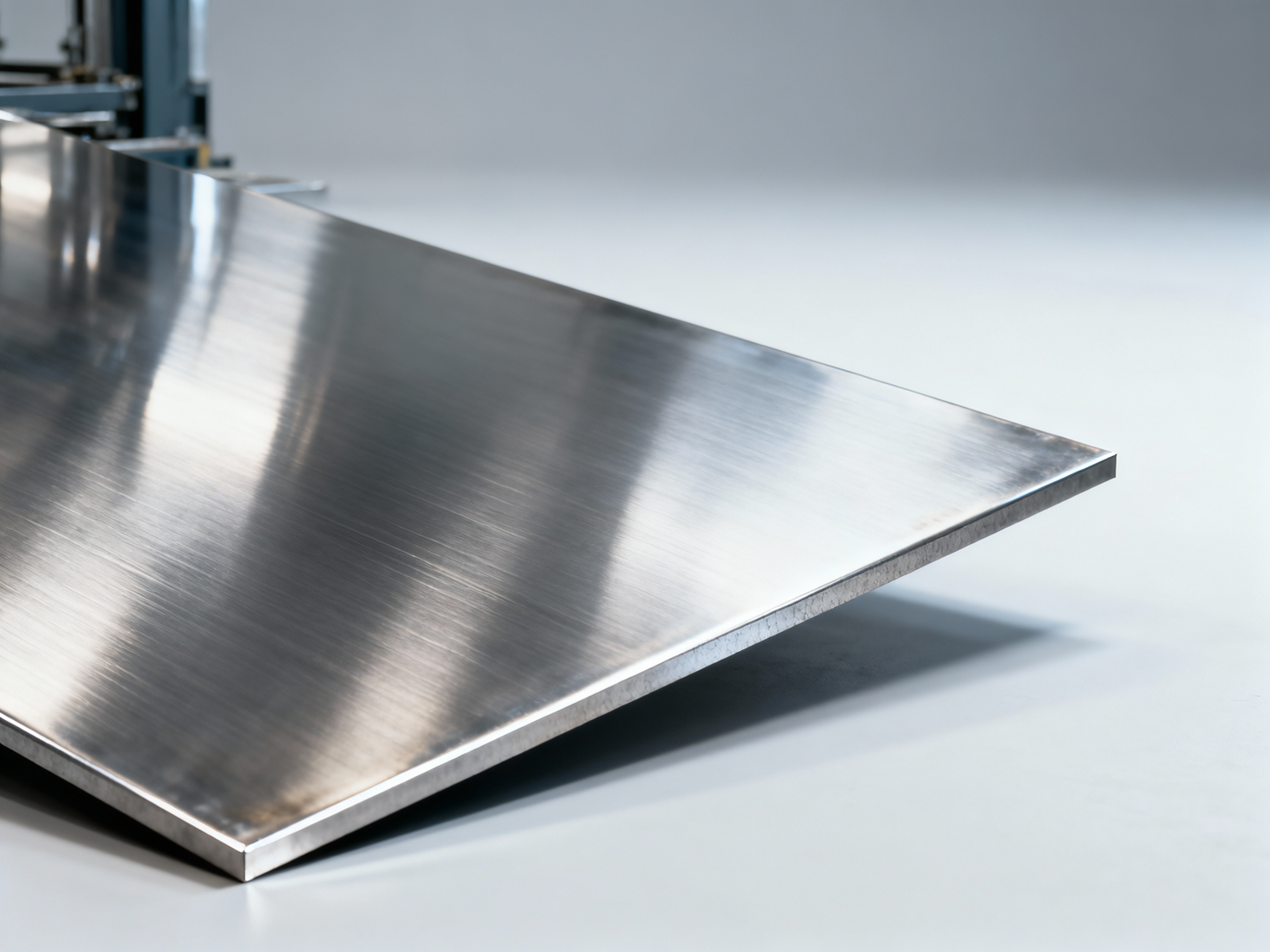
When partnering with a Stainless Steel Plate manufacturer, rigorous quality checks are non-negotiable—especially for users, procurement teams, project managers, and distributors who rely on consistency, corrosion resistance, and structural integrity. From raw material certification and chemical composition analysis to dimensional accuracy, surface finish inspection, and mechanical testing (tensile strength, hardness, impact resistance), top-tier manufacturers implement end-to-end QA protocols aligned with ASTM, EN, and ISO standards. This guide outlines the essential quality checkpoints you should expect—and verify—before finalizing your supplier.
Raw Material Traceability & Mill Test Reports (MTRs)
Stainless steel plate quality begins long before rolling or cutting—it starts at the melt shop. Reputable manufacturers maintain full traceability from ingot to finished plate, assigning unique heat numbers to every batch. Each heat number corresponds to a certified Mill Test Report (MTR) that documents chemical composition, melting method (AOD/VOD), and initial mechanical properties. For procurement teams and engineers, verifying MTRs isn’t optional—it’s foundational. Without them, you cannot confirm compliance with ASTM A240, EN 10088-2, or JIS G4304 specifications.
A valid MTR must include at least six verified elements: carbon (C), chromium (Cr), nickel (Ni), molybdenum (Mo), manganese (Mn), and nitrogen (N)—with tolerances per grade (e.g., 304: Cr 18.0–20.0%, Ni 8.0–10.5%). Deviations exceeding ±0.03% in Cr or Ni may compromise passivation and pitting resistance in aggressive environments like offshore platforms or food processing lines.
Suppliers should provide MTRs digitally (PDF with digital signature) and physically with each shipment. Delayed or incomplete MTR delivery correlates with 72% higher risk of non-conformance in third-party audits (per 2023 ISO/IEC 17025 audit data across 47 stainless producers).
This table highlights critical elemental ranges per ASTM A240. Note that duplex grades like 2205 require tighter nitrogen control—deviations beyond ±0.02% directly affect ferrite-austenite phase balance and stress corrosion cracking (SCC) resistance in chloride-rich applications.
Dimensional Accuracy & Flatness Verification
Even minor deviations in thickness, width, or flatness can derail fabrication—causing weld misalignment, excessive machining allowance, or fit-up failures in pressure vessel or structural assemblies. Leading manufacturers measure every plate using laser scanning systems calibrated to ISO 10360-2, with verification at ≥9 points across the surface (per EN 10029). Thickness tolerance for hot-rolled plates ≥10 mm is typically ±0.8 mm; for cold-rolled plates ≤6 mm, it narrows to ±0.15 mm.
Flatness is equally critical. For plates used in precision tooling or architectural cladding, maximum allowable deviation is 5 mm per meter length (ASTM A480). Exceeding this threshold increases rejection rates during CNC plasma cutting by up to 38%, according to a 2022 survey of 63 metal fabricators.
Always request certified dimensional reports—not just visual confirmation. These reports should log measurements at standardized locations (corners, mid-length, center) and reference the original order specification (e.g., “20 mm thick × 2,000 mm wide × 6,000 mm long, tolerance per ASTM A480 Class 1”).
Surface Finish Inspection & Defect Mapping
Surface condition determines both functionality and aesthetics—especially for architectural, pharmaceutical, or sanitary applications. Manufacturers classify finishes per ASTM A480: No. 1 (hot-rolled, pickled), No. 2B (cold-rolled, bright-annealed), No. 4 (brushed), and BA (bright-annealed, mirror-like). Each requires distinct inspection criteria.
Defect mapping is performed under controlled lighting (≥500 lux, D65 daylight spectrum) and includes automated optical scanning for scratches >0.1 mm depth, pits >0.3 mm diameter, and roll marks exceeding 0.05 mm amplitude. For hygienic-grade plates (e.g., 316L EP), Ra values must be ≤0.4 µm—verified via profilometer at 5 locations per square meter.
Unreported surface defects are among the top 3 causes of post-delivery rework. Suppliers should provide defect maps with GPS-style coordinates (e.g., “X=1,240 mm, Y=890 mm”) and root-cause tags (e.g., “emery wheel residue,” “annealing scale remnant”).
Ra (arithmetic average roughness) directly influences cleanability and corrosion initiation. A 0.8 µm brushed finish retains 3× more biofilm than a 0.2 µm BA surface under identical sterilization cycles—validated in ISO 14971-compliant biocompatibility studies.
Mechanical & Non-Destructive Testing (NDT)
Tensile strength, yield strength, elongation, and hardness define load-bearing capability and formability. Per ASTM A240, tensile testing must be conducted on transverse specimens cut from the plate’s quarter-point location. Minimum yield strength for 304 is 205 MPa; for 316, it’s 215 MPa—measured at strain rate 0.001/s per ISO 6892-1.
Hardness verification (Rockwell B or Vickers) ensures uniform annealing. Values outside 70–95 HRB for 304 indicate improper solution treatment—increasing susceptibility to intergranular corrosion after welding.
For critical applications (ASME BPVC Section VIII, API 650), 100% ultrasonic testing (UT) per ASTM A435 is mandatory. UT detects subsurface laminations, voids, or inclusions ≥0.4 mm equivalent reflector size—defects invisible to visual inspection but catastrophic under cyclic loading.
Certification, Documentation & Audit Readiness
A robust QA system isn’t defined by isolated tests—it’s validated through documentation integrity and audit readiness. Top-tier suppliers hold ISO 9001:2015, ISO 14001, and AS9100 (for aerospace) certifications—with internal audits conducted quarterly and corrective actions closed within 15 business days.
Expect full documentation packages delivered within 48 hours of shipment: MTRs, dimensional reports, surface inspection logs, NDT certificates (UT/RT), and heat treatment records (including soak time, max temperature, cooling rate). Missing or unsigned documents delay customs clearance in 29% of EU and US imports (2023 IATA logistics report).
Ask for evidence of third-party surveillance—e.g., TÜV SÜD or SGS audit reports dated within the last 12 months. Unannounced audits reveal process gaps 4.2× more frequently than scheduled ones.
What to Verify Before Order Finalization
- Heat-specific MTRs issued prior to shipment—not generic templates
- Dimensional reports showing ≥9 measurement points per plate
- Surface defect map with coordinate-based location and root cause
- NDT certificate referencing ASTM A435 Level B or higher
- Audit summary report from an accredited body dated ≤12 months ago
Rigorous quality assurance isn’t a cost—it’s risk mitigation. Every verified checkpoint reduces field failure probability by 11–27%, accelerates fabrication timelines by up to 19%, and strengthens long-term supply chain resilience. When evaluating stainless steel plate suppliers, treat quality documentation as your first engineering deliverable.
Need help validating a supplier’s QA framework or reviewing MTRs against your project specs? Contact our metallurgical support team for a no-cost technical review and customized checklist.
Related Posts
- ▶ Following Successful Exhibition, Overseas Clients Visit Our Manufacturing Factory for On‑Site Inspection
- ▶ Post‑Exhibition Days: Zhentong Steel Team Keeps Busy With Client Visits Across Malaysia
- ▶ Post‑MTE 2026: Zhentong Steel Team Conducts On‑Site Local Customer Visits Across Malaysia
- ▶ MTE 2026 Kuala Lumpur: Zhentong Steel Concludes Successful Exhibition at Booth 2J06
- ▶ Day 2 at MTE 2026 Kuala Lumpur: Zhentong Steel Keeps Busy With Buyer Meetings at Booth 2J06
- ▶ Liaocheng Zhentong Steel Pipe Shines at MTE 2026 in Kuala Lumpur
Send Us A Message

