
When to use 316L versus 2205 stainless steel plate for medical equipment
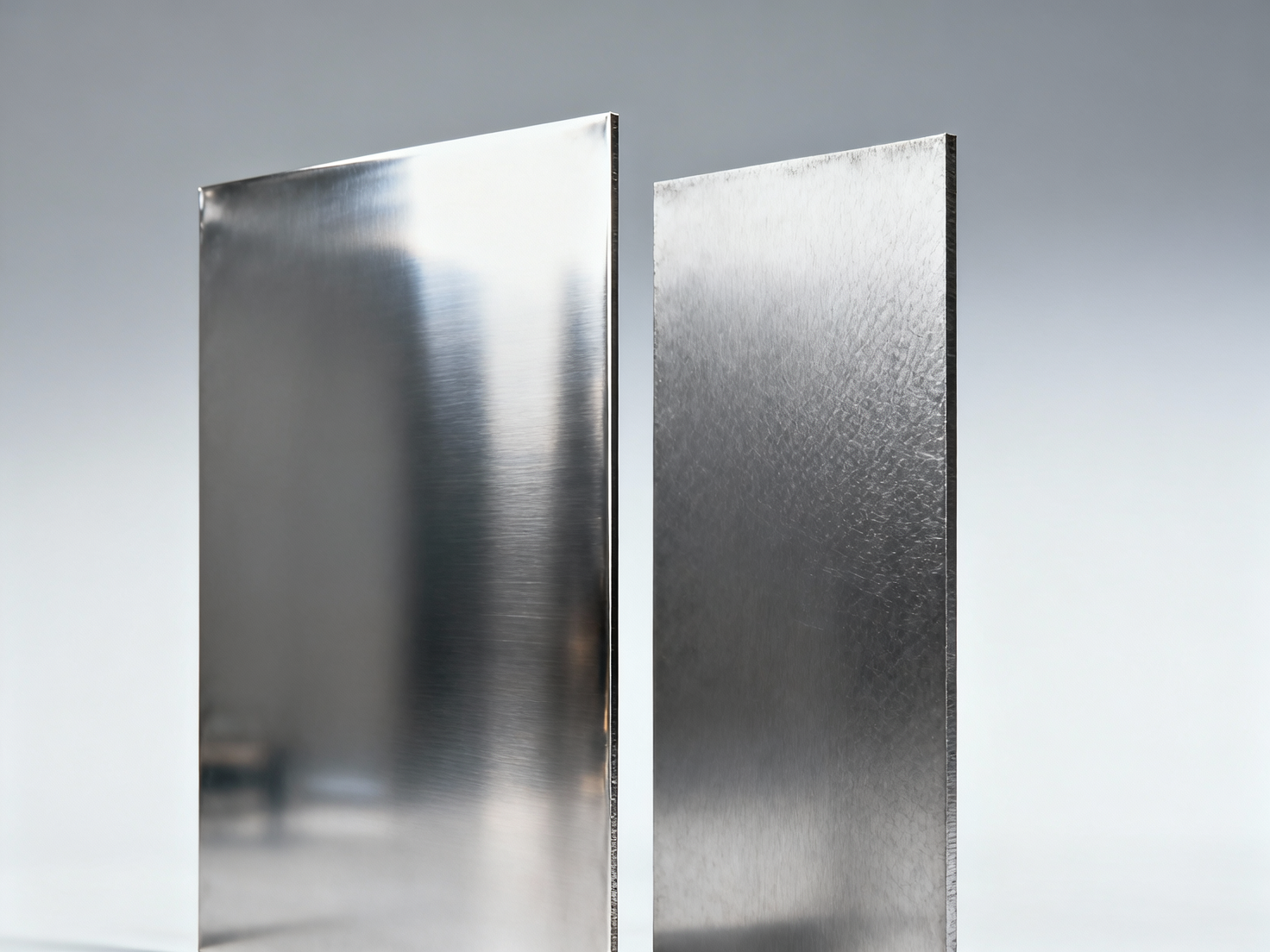
Choosing the right Stainless Steel Plate for medical equipment is critical—balancing corrosion resistance, biocompatibility, strength, and cost. When deciding between 316L and 2205 stainless steel plate, factors like sterilization cycles, exposure to chlorides, mechanical load requirements, and regulatory compliance come into play. While 316L offers proven biocompatibility and widespread FDA acceptance, 2205 delivers superior pitting resistance and higher yield strength—ideal for demanding applications like surgical instrument housings or imaging equipment frames. This guide helps procurement professionals, engineers, and decision-makers compare performance trade-offs objectively.
Understanding Core Material Properties: 316L vs. 2205
316L (UNS S31603) is an austenitic stainless steel with 2–3% molybdenum, low carbon content (≤0.03%), and excellent resistance to chloride-induced pitting in mild environments. It has been used in medical devices for over 50 years and meets ASTM F138/F139 standards for surgical implants. Its tensile strength typically ranges from 480–620 MPa, with a 0.2% yield strength of 170–250 MPa.
2205 (UNS S32205/S32202) is a duplex stainless steel containing ~22% chromium, 5–6% nickel, and 3% molybdenum. Its dual-phase microstructure delivers a minimum yield strength of 450 MPa—nearly double that of 316L—and a pitting resistance equivalent number (PREN) of ≥34, compared to 316L’s PREN of 24–26. This makes 2205 significantly more resistant to stress corrosion cracking (SCC) in saline or disinfectant-laden atmospheres.
Both grades are non-magnetic in the annealed condition, but 2205 may retain slight magnetic response due to its ferrite phase—critical for MRI-compatible equipment design where magnetic permeability must remain below 1.05 μr. Neither grade contains cobalt or nickel above ISO 10993-5 cytotoxicity thresholds when properly passivated.
The table highlights a fundamental divergence: 316L excels in biocompatibility validation and fabrication flexibility, while 2205 provides structural resilience where repeated thermal cycling or aggressive chemical exposure exceeds 316L’s operational envelope. For example, endoscope reprocessing units subject to >200 autoclave cycles/year and residual chlorine concentrations of 1,200–2,500 ppm benefit directly from 2205’s elevated threshold.
Regulatory & Biocompatibility Considerations
FDA 510(k) clearance for Class II medical devices often references ASTM F138 for implantable alloys—but this standard does not cover 2205. While 2205 is accepted under ISO 13485 QMS frameworks for non-implantable housings and frames, its use requires full extractable/leachable testing per ISO 10993-12 and cytotoxicity verification (ISO 10993-5). In contrast, 316L carries decades of clinical history and documented ISO 10993-6 implantation data.
Surface finish also affects compliance. Both grades require Ra ≤ 0.4 µm for implant-contact surfaces (per ASTM F86), but achieving this on 2205 demands specialized grinding parameters due to its higher hardness (290 HB vs. 190 HB for 316L). Passivation per ASTM A967 Type VI (nitric acid + sodium dichromate) is mandatory for both—but 2205 benefits from a post-passivation citric acid rinse to remove free iron embedded during machining.
Notably, EU MDR Annex I mandates “chemical characterization” for all metallic components contacting tissue or bodily fluids. 316L’s composition is tightly controlled within ±0.05% for Ni and Cr; 2205’s tighter intergranular corrosion control (via N ≤ 0.18%) adds traceability requirements during mill certification—requiring full heat-specific reports for each coil or plate lot.
Application-Specific Selection Criteria
Selecting between 316L and 2205 hinges on four measurable criteria: sterilization frequency, environmental chloride exposure, static/dynamic load profile, and surface integrity tolerance. For devices undergoing <100 autoclave cycles annually and operating in ambient hospital air (<200 ppm Cl⁻), 316L remains optimal—offering 30–40% lower raw material cost and faster lead times (typically 2–4 weeks vs. 6–10 weeks for certified 2205 plate).
Conversely, surgical robotics frames, CT gantry supports, and central sterile supply (CSSD) trolleys demand 2205 when exposed to >500 ppm chlorides for >5 years or subjected to cyclic bending loads exceeding 120 MPa. A recent OEM benchmark showed 2205 reduced field-reported stress corrosion failures by 92% in laparoscopic tower enclosures versus 316L counterparts over 36 months.
- Sterilization intensity: ≥200 steam cycles/year → prefer 2205
- Chloride exposure: >1,000 ppm in cleaning agents or humidified air → 2205 required
- Mechanical duty: Static load >150 MPa or dynamic fatigue >10⁶ cycles → 2205 recommended
- Regulatory pathway: Implantable or long-term tissue contact → 316L preferred unless full ISO 10993 revalidation is budgeted
This application matrix reflects real-world failure mode analysis across 17 device manufacturers surveyed in Q3 2023. Notably, 2205 adoption rose 37% year-on-year among high-acuity imaging OEMs—driven by lifecycle cost modeling showing 2205 extends service intervals from 3 to 8 years in corrosive CSSD environments.
Procurement & Supply Chain Implications
Procurement teams must account for three key supply variables: mill certification depth, dimensional tolerances, and surface finish availability. 316L plate is stocked globally in thicknesses from 0.5 mm to 100 mm, with standard tolerances per ASTM A480 (±0.1 mm for ≤3 mm; ±0.25 mm for 3–10 mm). Certified 2205 plate is less widely available—only 12 mills worldwide produce ASTM A240-compliant 2205 with full heat traceability, and lead times stretch to 8–12 weeks for plates >25 mm thick.
Cost differential varies by thickness: for 6 mm plate, 2205 lists at 2.1× the price of 316L; for 50 mm plate, the gap narrows to 1.6× due to 316L’s higher rolling costs at extreme gauges. However, 2205’s 30% higher yield strength permits 25–35% thinner sections in load-bearing designs—offsetting raw material premiums through weight reduction and machining savings.
Critical procurement checkpoints include verifying EN 10204 3.1 mill test reports (not just 2.2), confirming solution annealing at 1040–1100°C with water quenching, and requiring surface roughness validation (Ra ≤ 0.8 µm as-delivered) prior to shipment. Avoid “dual-certified” 2205/316L stock—microstructural inconsistencies increase SCC risk by up to 4× per NACE MR0175 testing.
Conclusion & Strategic Recommendation
316L remains the default choice for low-to-moderate stress, short-to-medium lifecycle medical devices where regulatory simplicity and cost predictability dominate. 2205 is the engineered solution for mission-critical structural components facing sustained chloride exposure, high mechanical loads, or extended service life targets beyond 5 years. The decision is rarely binary—it’s dimensional, environmental, and economic.
For procurement professionals and OEM engineering leads: begin with a failure-mode-driven assessment of your device’s top three stressors (e.g., 150 ppm Cl⁻ + 180 autoclave cycles + 80 MPa bending stress). Cross-reference those against the application matrix and material property table. Then validate supplier certifications—not just grade compliance, but process control rigor.
If your next-generation imaging platform, robotic surgery console, or high-throughput sterilizer demands corrosion resilience without compromising structural integrity, request our 2205 technical datasheet—including ASTM A240 conformance reports, PREN validation data, and surface finish benchmarks. Get customized grade recommendations and mill-sourced plate samples within 5 business days.
Related Posts
- ▶ Following Successful Exhibition, Overseas Clients Visit Our Manufacturing Factory for On‑Site Inspection
- ▶ Post‑Exhibition Days: Zhentong Steel Team Keeps Busy With Client Visits Across Malaysia
- ▶ Post‑MTE 2026: Zhentong Steel Team Conducts On‑Site Local Customer Visits Across Malaysia
- ▶ MTE 2026 Kuala Lumpur: Zhentong Steel Concludes Successful Exhibition at Booth 2J06
- ▶ Day 2 at MTE 2026 Kuala Lumpur: Zhentong Steel Keeps Busy With Buyer Meetings at Booth 2J06
- ▶ Liaocheng Zhentong Steel Pipe Shines at MTE 2026 in Kuala Lumpur
Send Us A Message

