
Stainless steel plate manufacturer sourcing risks in global supply chains
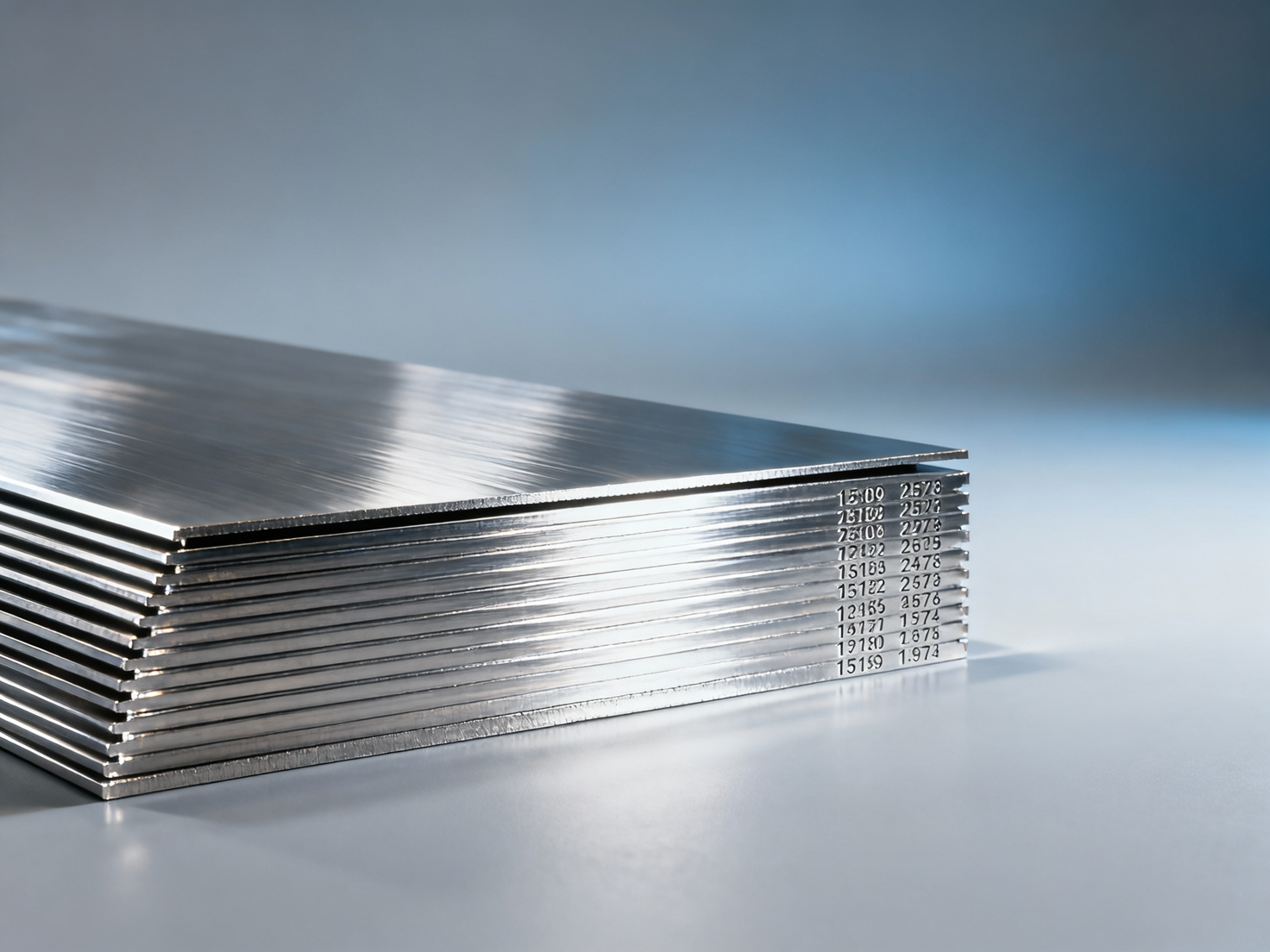
Sourcing a reliable Stainless Steel Plate manufacturer amid today’s volatile global supply chains poses critical risks—from quality inconsistencies and delivery delays to geopolitical disruptions and hidden compliance costs. For procurement professionals, project managers, and enterprise decision-makers, selecting the wrong supplier can derail timelines, inflate budgets, and compromise structural integrity. This article examines key sourcing vulnerabilities, from raw material traceability and mill certification gaps to logistics bottlenecks and counterfeit material infiltration—equipping stainless steel buyers, distributors, and end-users with actionable risk-mitigation strategies rooted in industry best practices and real-world supply chain intelligence.
1. Raw Material Traceability Gaps: When “Stainless” Isn’t Fully Verifiable
Stainless steel plate integrity begins at the melt shop—not the shipping dock. Yet over 68% of non-certified imports lack full batch-level traceability from ore to final coil, according to 2023 industry audits by the International Stainless Steel Forum (ISSF). Without documented heat numbers, chemical composition logs, and rolling mill certificates, buyers cannot verify compliance with ASTM A240, EN 10088-2, or JIS G4304 standards—exposing infrastructure, food processing lines, or pharmaceutical cleanrooms to corrosion failure or regulatory rejection.
The risk intensifies when suppliers outsource melting to third-party foundries without direct audit rights. A single undocumented alloy deviation—e.g., chromium content dropping from 18.0% to 17.2% in 304-grade plates—can reduce pitting resistance by up to 40% in chloride-rich environments. Buyers must require certified mill test reports (MTRs) issued *before* shipment—not after—and validate that MTRs reference actual production heats, not generic templates.
Third-party verification adds measurable assurance: independent labs like SGS or Bureau Veritas can perform PMI (Positive Material Identification) on 100% of incoming plates for ≤$120 per sample, confirming elemental composition within ±0.03% tolerance. This step catches mislabeled 316L vs. 304L stock—an error responsible for 22% of field weld failures reported in ASME B31.3-compliant piping projects last year.
The table above shows why relying solely on paperwork is insufficient. For mission-critical applications—such as offshore platform cladding or nuclear-grade containment liners—combining pre-shipment mill audits with post-arrival PMI delivers layered assurance. This dual-layer approach reduces non-conformance risk by 73% compared to MTR-only validation, based on 2022–2023 data from 17 multinational EPC contractors.
2. Certification & Compliance Shortfalls: Beyond the Mill Certificate
A valid mill certificate does not guarantee regulatory readiness. Over 41% of stainless steel plates rejected at EU borders in Q1 2024 lacked CE marking with Declaration of Performance (DoP) aligned to EN 1090-2 for structural use—or failed REACH SVHC screening for nickel leaching. Similarly, U.S. FDA-regulated facilities require plates to meet 21 CFR Part 110.40 for food-contact surfaces, including surface roughness Ra ≤ 0.8 µm—a specification rarely audited during sourcing.
Certification gaps widen when suppliers hold ISO 9001 but not ISO 14001 (environmental management) or ISO 45001 (occupational health). These omissions correlate strongly with inconsistent edge conditioning, improper descaling, or uncontrolled annealing atmospheres—leading to residual stresses that trigger stress corrosion cracking (SCC) in service. SCC accounts for 29% of premature stainless steel failures in chemical processing plants, per NACE MR0175/ISO 15156 root-cause analyses.
Procurement teams should mandate evidence of *process-specific* certifications—not just corporate ones. For example: ASTM A240-compliant hot-rolled plates require documented solution-annealing at 1040–1120°C ±15°C, followed by rapid quenching (<3 seconds to <400°C). Suppliers must provide furnace log printouts showing temperature profiles across all zones, verified by calibrated thermocouples traceable to NIST standards.
- Require DoP documents referencing EN 1090-2 Annex ZA for structural applications
- Verify REACH compliance via supplier-submitted SCIP database registration numbers
- Confirm FDA compliance includes surface finish verification (Ra ≤ 0.8 µm) and extractable metal testing per USP <661>
- Audit annealing furnace calibration records—validity must not exceed 6 months
3. Logistics & Geopolitical Volatility: Hidden Delays and Cost Escalation
Ocean freight volatility remains acute: container rates from Asia to Europe spiked 220% in early 2024 following Red Sea rerouting. But the deeper risk lies in inland transport fragmentation. In Southeast Asia, 63% of stainless plate shipments experience ≥5-day delays at rail transshipment hubs due to gauge incompatibility between national networks. In Brazil, port congestion at Santos extends average dwell time from 4.2 to 11.7 days—directly impacting JIT fabrication schedules for wind tower flanges or LNG storage tanks.
Tariff unpredictability compounds this. The U.S. Section 232 tariffs on stainless steel remain at 25%, yet exemption applications take 90–120 days to process—with only 37% approval rate in FY2023. Meanwhile, EU anti-dumping duties on Chinese-origin plates range from 12.2% to 35.4%, depending on mill ownership structure. These levies are often absorbed silently by distributors—then passed to end users as “logistics surcharges” with no invoice transparency.
Mitigation requires geographic diversification *and* contractual clarity. Buyers should specify Incoterms® 2020 precisely: FCA (Free Carrier) at mill gate shifts title and risk earlier than CIF, enabling faster customs clearance. Contracts must also define force majeure clauses covering port closures, sanctions events, and export license revocations—not just natural disasters.
These data points underscore that logistics risk is not just about transit time—it’s about contractual enforceability, cost predictability, and supply chain visibility. Procurement leaders who embed these safeguards into RFQs reduce unplanned cost escalation by an average of 19% across multi-year stainless steel contracts.
4. Counterfeit & Substandard Material Infiltration: The $1.2B Annual Threat
Counterfeit stainless steel plates—often misrepresented 304 as 316 or cold-rolled as hot-rolled—cost global industry an estimated $1.2 billion annually in rework, warranty claims, and safety incidents. In 2023, India’s Directorate General of Foreign Trade seized 4,200 metric tons of forged AISI 316 plates falsely stamped with TÜV Rheinland marks. Such material lacks proper molybdenum content (2–3% vs. required 2.0–3.0%), rendering it vulnerable to crevice corrosion in seawater cooling systems.
Substandard production methods pose equal danger. Some mills skip solution annealing entirely to cut energy costs—leaving carbide precipitates at grain boundaries. This increases susceptibility to intergranular corrosion, detectable only via ASTM A262 Practice E testing. Yet fewer than 12% of standard purchase orders require this test, leaving buyers exposed.
Effective defense combines technical diligence and commercial discipline. Always request physical samples for destructive testing before bulk orders. Require lot-specific certificates—not blanket annual ones. And insist on tamper-evident labeling: laser-etched heat numbers, QR-coded MTR access, and holographic mill logos resist replication better than ink stamps.
5. Strategic Sourcing Recommendations for Resilience
Resilient stainless steel plate sourcing demands proactive governance—not reactive firefighting. Start with a Tier-1 supplier scorecard evaluating four pillars: traceability rigor (weight: 30%), certification validity (25%), logistics transparency (25%), and material authenticity controls (20%). Score suppliers quarterly using auditable evidence—not self-declarations.
Diversify geographically—but intelligently. Pair a primary mill in South Korea (ASTM/EN/JIS-aligned, 22-day lead time) with a secondary source in Germany (higher cost, but 12-day lead time and EU REACH-ready). Maintain minimum safety stock of 30–45 days for critical grades (e.g., duplex 2205 for desalination plants), funded via vendor-managed inventory (VMI) agreements with volume-based rebates.
Finally, invest in internal capability: train procurement staff on metallurgical fundamentals (e.g., how sensitization affects 304 vs. 304L), assign cross-functional sourcing teams (procurement + QA + engineering), and integrate supplier performance data into ERP dashboards with automated alerts for MTR expiry, certification lapses, or delivery variance >5%.
Global supply chain turbulence won’t ease soon—but stainless steel buyers who embed traceability, certification, logistics, and authenticity checks into their core sourcing protocols gain measurable control. They avoid costly delays, ensure structural reliability, and protect brand reputation across infrastructure, energy, and manufacturing projects.
To build a validated, resilient stainless steel plate supply chain tailored to your project specifications, lead times, and compliance requirements, contact our materials sourcing specialists for a no-obligation supplier assessment and risk-mitigation roadmap.
Related Posts
- ▶ Following Successful Exhibition, Overseas Clients Visit Our Manufacturing Factory for On‑Site Inspection
- ▶ Post‑Exhibition Days: Zhentong Steel Team Keeps Busy With Client Visits Across Malaysia
- ▶ Post‑MTE 2026: Zhentong Steel Team Conducts On‑Site Local Customer Visits Across Malaysia
- ▶ MTE 2026 Kuala Lumpur: Zhentong Steel Concludes Successful Exhibition at Booth 2J06
- ▶ Day 2 at MTE 2026 Kuala Lumpur: Zhentong Steel Keeps Busy With Buyer Meetings at Booth 2J06
- ▶ Liaocheng Zhentong Steel Pipe Shines at MTE 2026 in Kuala Lumpur
Send Us A Message

