
Rebar Cost Factors Buyers Should Check
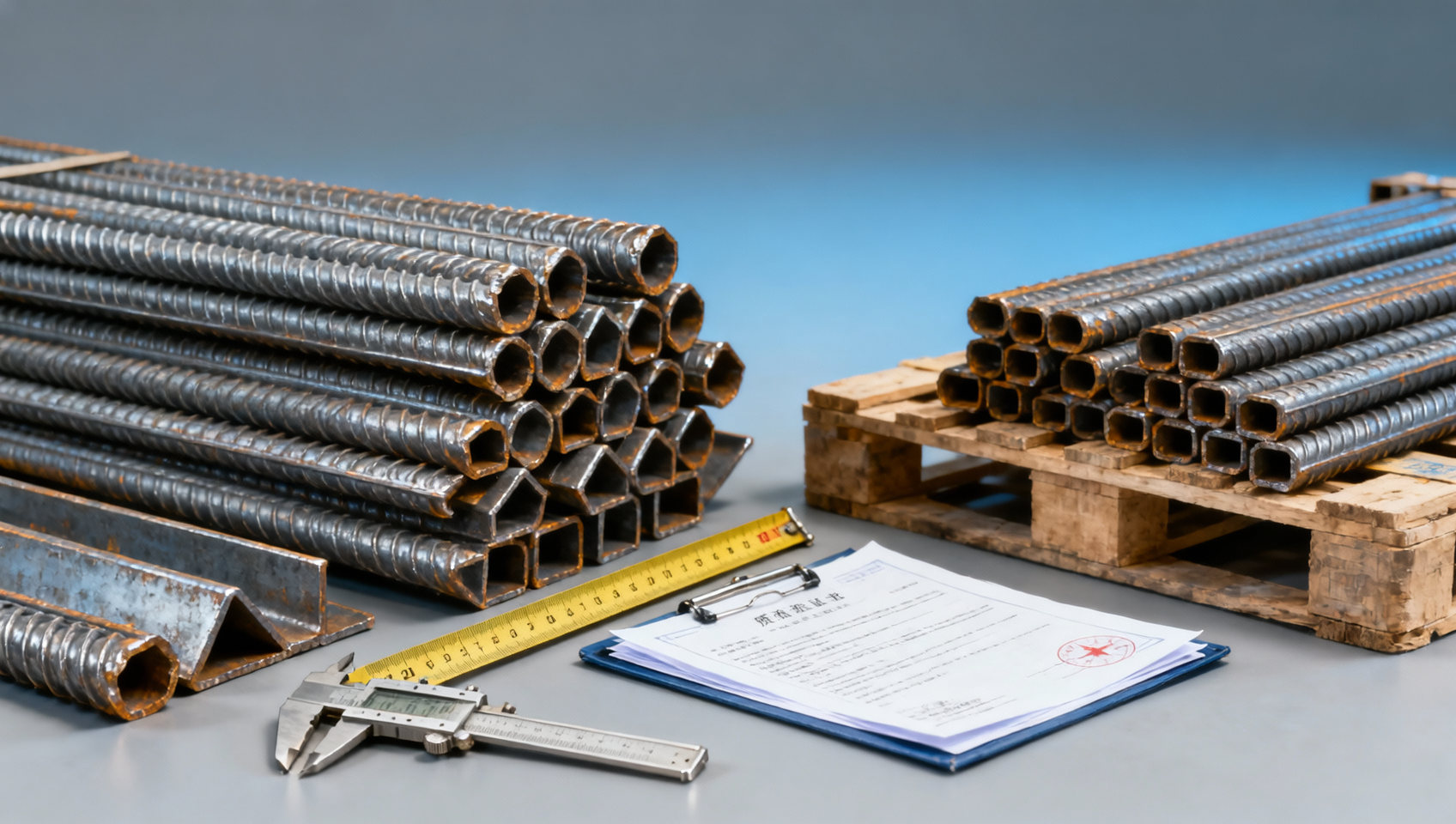
Before buying Rebar, understanding the real cost drivers can prevent budget overruns and quality risks. From raw material grades and processing methods to logistics, market demand, and compliance standards, every factor affects final pricing. For buyers comparing Rebar and related steel products like Angle Steel, knowing what to check helps improve sourcing decisions, project planning, and long-term value.
In steel and structural sections procurement, rebar is rarely a simple commodity purchase. Two quotations that look close on a per-ton basis can create a 5%–15% difference in total project cost once cutting, bending, coating, testing, packaging, transport, and delivery reliability are included. For contractors, distributors, plant operators, and project managers, the right buying decision depends on checking both visible and hidden cost variables.
This guide explains the main rebar cost factors buyers should review before placing an order. It is written for research-stage buyers, purchasing teams, engineering users, maintenance personnel, decision-makers, and resellers who need practical sourcing criteria rather than vague price advice. The focus stays on steel products, procurement risk control, and how to compare rebar offers in a realistic B2B environment.
Raw Material Grade, Steel Chemistry, and Specification Impact
The first cost driver is the steel itself. Rebar price changes significantly depending on grade, yield strength, chemical composition, and diameter range. In many markets, common grades used in reinforced concrete projects include strength levels around 400 MPa, 500 MPa, or similar equivalents under local standards. Higher strength material can reduce steel consumption in some designs, but it usually raises the per-ton purchase price and may tighten fabrication requirements.
Diameter also matters. Small diameters such as 8 mm to 12 mm often involve more pieces per ton and more handling effort, while larger diameters like 20 mm to 32 mm may carry different rolling costs, stocking conditions, and transport loading efficiency. If a buyer requests multiple diameters in one order, the supplier may price differently than for a single-size full truckload or mill run.
Steel chemistry affects both performance and cost. Rebar designed for seismic applications, weldability, or improved bendability may require tighter control of carbon, manganese, and micro-alloying elements. That control increases production complexity. Buyers who only compare base price without checking grade equivalency risk receiving material that appears cheaper but does not match site demands, fabrication practice, or inspection standards.
Why specification mismatch increases total cost
A lower initial quotation can become expensive if the rebar fails bend tests, has inconsistent rib geometry, or cannot meet the engineer’s specified standard. Replacement, schedule delay, and retesting can create losses far above the original per-ton saving. On projects with tight concrete pour sequences, even a 3-day to 7-day delay may affect labor planning, crane usage, and subcontractor coordination.
For distributors and stockists, wrong grade selection creates inventory risk. Material that does not align with the local construction code can sit in stock for 30–90 days longer than standard items. Slow-moving inventory increases capital cost, storage cost, and price exposure if the market falls before resale.
Key specification checks before asking for a quote
- Confirm standard and grade equivalence, not just “high strength” wording.
- Verify diameter range, length format, and allowable tolerance.
- Check whether bendability, weldability, or seismic performance is required.
- Ask whether the quote is based on theoretical weight or actual weighbridge weight.
The table below shows how specification choices often influence procurement cost and project suitability in practical steel sourcing.
The key takeaway is simple: rebar cost starts with technical fit. If the grade, size, and standard are not aligned with the actual application, the quote comparison is incomplete and the cheapest offer may become the most expensive option over the project cycle.
Processing, Fabrication, and Surface Condition Costs
Many buyers focus on black plain supply by ton, but rebar cost often changes after processing requirements are added. Straight length rebar, cut-to-length bars, bent shapes, cages, mesh-related supply, and bundled kits for phased construction all involve different labor, equipment time, scrap rates, and quality control procedures. A processing surcharge of 2%–8% is common in routine work, while complex bending schedules or small-batch customization can increase the added cost further.
Fabrication waste is another overlooked item. When buyers order standard 12 m lengths for a job that requires many short segments, site cutting may create avoidable scrap. A supplier that offers cut-and-bend service may quote a higher unit rate but reduce overall steel waste by 1%–3% and lower on-site labor hours. For project managers, that tradeoff is often more important than the base material price.
Surface condition also influences cost. Standard black rebar is common, but projects in aggressive environments may require epoxy-coated, galvanized, or otherwise protected steel products. Those treatments add material and processing cost, and they also affect lead time. Buyers should consider whether corrosion exposure justifies the premium based on service life, maintenance access, and repair risk.
Processing services that can change the quotation
The more the order moves from commodity supply to project-ready delivery, the more line items should be reviewed. This is especially important for precast plants, infrastructure projects, warehouse construction, and distributors serving small contractors who need mixed quantities.
- Cutting to fixed lengths, often with tolerance control such as ±5 mm or tighter for selected uses.
- Bending by drawing or schedule, including stirrups, hooks, and project-specific shapes.
- Bundling and labeling by zone, floor, or pour sequence to reduce site confusion.
- Protective treatment or special storage preparation for outdoor exposure.
Comparing supply formats
Before selecting a supply format, buyers should compare the effect on labor, scrap, installation speed, and schedule coordination. The following table helps frame that decision.
A useful procurement question is not “Which rebar is cheaper?” but “Which supply form gives the lower installed cost?” On projects with tight deadlines, fabrication support can reduce manual handling, speed up assembly, and avoid schedule disruption that costs more than the processing premium.
Logistics, Order Volume, and Delivery Timing
Rebar is heavy, low-margin freight, so logistics can reshape the final landed cost quickly. Distance from mill or stockyard, truck loading efficiency, unloading constraints, port handling for imports, and whether the order ships as full loads or partial loads all affect the delivered price. On some orders, freight may contribute 5%–12% of the total cost, and in remote regions the share can be even higher.
Order volume is closely tied to logistics efficiency. A buyer ordering 20–30 tons in one batch may receive a better transport allocation than a buyer asking for repeated 3-ton to 5-ton partial deliveries. However, oversized batch buying can also increase yard congestion, storage loss, and exposure to rust or mix-ups if the material sits on site for weeks before use.
Delivery timing matters as much as freight distance. Rebar needed in 24–72 hours usually carries a premium if the supplier must pull from priority stock, rearrange rolling schedules, or expedite transport. For scheduled projects, giving a 7-day to 14-day forecast often improves rate stability and reduces the chance of substitution or split shipment.
Delivery planning mistakes that raise cost
Procurement teams often lose money not because the mill price was high, but because delivery planning was weak. This is common when purchasing, site operations, and engineering teams do not coordinate reinforcement demand by construction phase.
- Ordering too late and paying expedited freight or emergency processing charges.
- Ordering too early and storing steel outdoors for 2–6 weeks without proper protection.
- Splitting orders into many low-volume shipments that increase unit freight cost.
- Ignoring unloading conditions such as crane slot timing, access roads, or forklift limits.
Typical logistics checkpoints
The table below summarizes practical checks that help buyers control rebar delivery cost and site risk.
For steel buyers, delivery planning is part of cost control, not an afterthought. A well-timed order with suitable batch size can often save more than aggressive price negotiation on the rebar itself.
Market Volatility, Compliance, and Supplier Risk
Rebar pricing is sensitive to steelmaking inputs, local construction demand, energy cost, scrap or billet trends, and regional policy shifts. In active construction periods, prices may change weekly or even faster. A quote valid for 24 hours, 3 days, or 7 days should not be treated the same in procurement planning. Buyers should ask what triggers repricing, what is fixed, and what remains adjustable until dispatch.
Compliance is another major cost factor. Rebar that must meet project-specified standards, mill test documentation, third-party inspection requirements, or public works acceptance procedures usually involves more traceability and paperwork. These are legitimate cost components. If a supplier cannot provide heat number traceability, test certificates, or dimensional consistency records, the quoted price may be low because the compliance burden is being shifted to the buyer.
Supplier risk should be evaluated beyond the unit rate. Late shipment, inconsistent weight, mixed grades in a bundle, or repeated quality claims can damage project continuity and distributor reputation. A reliable supplier is not just one with competitive rebar pricing, but one with stable production, responsive communication, and a clear issue-resolution process within 24–48 hours when discrepancies appear.
What procurement teams should verify
When comparing offers, use a risk checklist instead of relying only on quoted tonnage price. This is especially important for infrastructure, industrial buildings, and multi-phase developments where a single supply disruption can affect several trades.
- Check quote validity period and whether raw material fluctuation clauses apply.
- Verify documentation scope, including test certificates and traceability details.
- Review claim handling steps for shortage, damage, or non-conformance.
- Confirm whether the supplier can support repeat orders across 2–4 project phases.
Balanced supplier evaluation
The following comparison table helps buyers look beyond price and assess total sourcing reliability in the steel and sections business.
In rebar procurement, supplier reliability is a cost factor because inconsistency creates downstream losses. Buyers should price risk, not just steel weight.
How to Compare Rebar Quotations and Make a Better Buying Decision
A strong buying decision uses total cost logic. This means comparing not only rate per ton, but also technical compliance, fabrication scope, freight, delivery window, claim process, and suitability for the actual project phase. For some buyers, angle steel, channels, flat bars, and rebar may be ordered together. In those cases, supplier coordination and combined logistics can improve purchasing efficiency and reduce administrative workload.
The most effective method is to standardize RFQ content. When each supplier quotes against the same grade, diameter list, weight basis, processing scope, delivery point, and document requirement, price comparison becomes fairer. Without this step, buyers often compare unmatched offers and mistake missing services for savings.
Decision-makers should also separate short-term and long-term value. A distributor may prioritize fast stock turnover and repeatable quality. A project contractor may prioritize installation efficiency and low claim risk. An end user or maintenance team may focus on durability and replacement intervals. The right rebar procurement model depends on the business objective, not only on immediate purchase price.
A practical 5-step quotation review process
- Define grade, diameter, quantity, length, and applicable standard clearly.
- Ask suppliers to separate base material, processing, freight, and other charges.
- Compare delivery lead time, stock availability, and quote validity window.
- Review documents, inspection support, and issue-resolution commitments.
- Calculate installed or landed cost instead of relying only on per-ton numbers.
FAQ for common buyer concerns
Below are concise answers to questions often raised by purchasers, site users, distributors, and project leaders during rebar sourcing.
How much does delivery timing affect rebar cost?
It can be significant. Urgent orders may carry extra processing or transport cost, especially if delivery is required within 24–72 hours. A planned order window of 7–14 days generally gives more stable pricing and better stock coordination.
Is cut-and-bend rebar always more expensive?
Upfront, yes, but not always in total. If it lowers scrap by 1%–3%, reduces on-site labor, and speeds installation, the total installed cost may be lower than buying straight bars and processing everything at the project site.
What should buyers compare when choosing between rebar suppliers?
Compare at least 6 items: grade compliance, diameter tolerance, processing scope, delivery lead time, documentation, and claim handling. If any of these are unclear, the quote is incomplete.
Can a lower-grade rebar reduce cost safely?
Only if the design and local code allow it. Substituting grade without engineering approval can cause rejection, redesign, and serious schedule impact. Technical suitability must come before unit price savings.
Rebar cost is shaped by specification, processing, logistics, market timing, and supplier reliability. Buyers who check these factors early can avoid hidden charges, protect quality, and improve project execution. Whether you are sourcing for construction, resale, industrial use, or a mixed steel package that includes products like angle steel, a structured comparison will lead to stronger purchasing outcomes and better long-term value.
If you need support comparing rebar options, reviewing technical requirements, or planning a more cost-effective steel sourcing approach, contact us today to discuss your application, request product details, or get a tailored supply solution.
Related Posts
- ▶ Following Successful Exhibition, Overseas Clients Visit Our Manufacturing Factory for On‑Site Inspection
- ▶ Post‑Exhibition Days: Zhentong Steel Team Keeps Busy With Client Visits Across Malaysia
- ▶ Post‑MTE 2026: Zhentong Steel Team Conducts On‑Site Local Customer Visits Across Malaysia
- ▶ MTE 2026 Kuala Lumpur: Zhentong Steel Concludes Successful Exhibition at Booth 2J06
- ▶ Day 2 at MTE 2026 Kuala Lumpur: Zhentong Steel Keeps Busy With Buyer Meetings at Booth 2J06
- ▶ Liaocheng Zhentong Steel Pipe Shines at MTE 2026 in Kuala Lumpur
Send Us A Message

