
What affects lead time for custom stainless steel plate orders
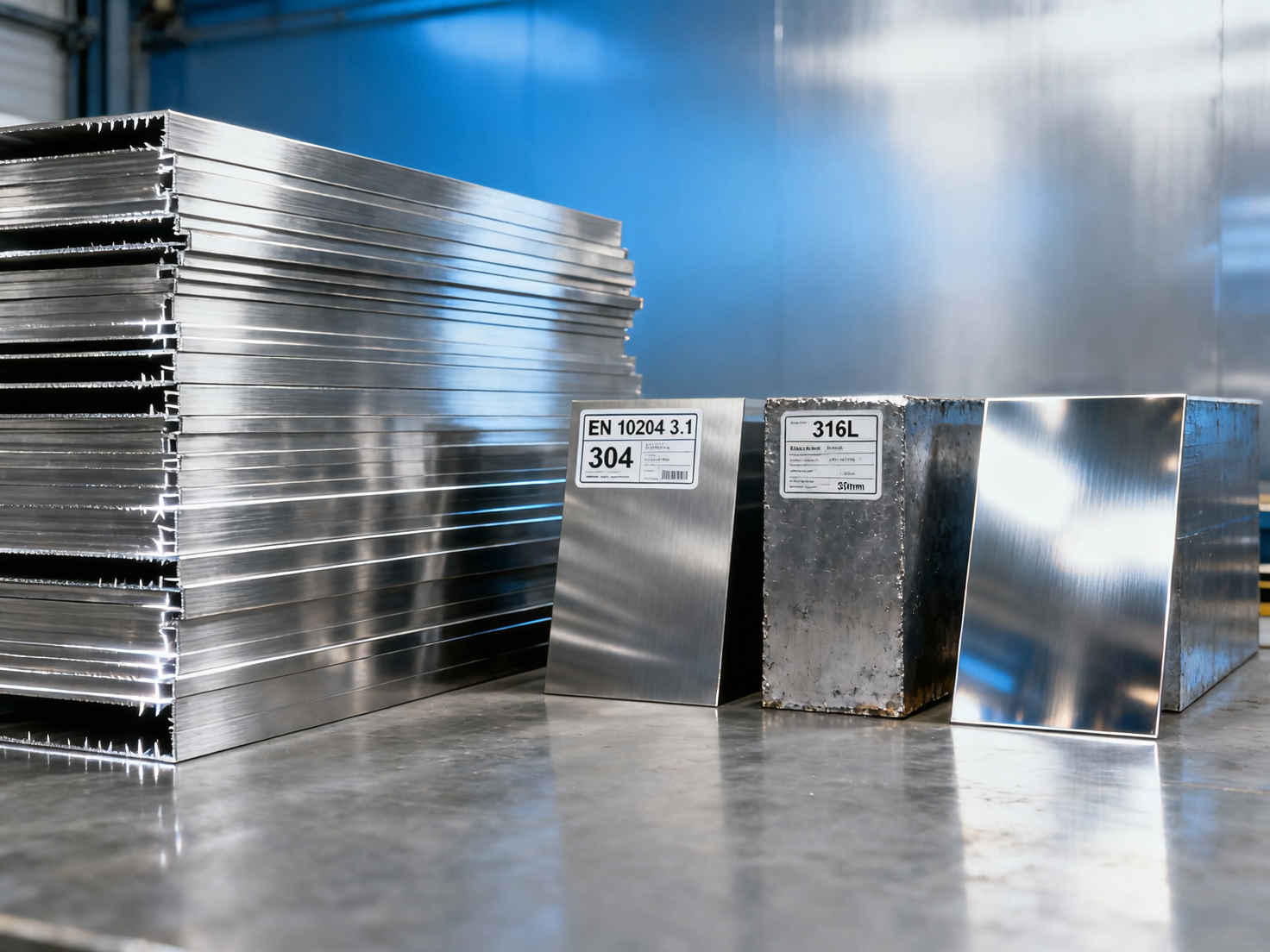
Lead time for custom stainless steel plate orders significantly impacts project scheduling, procurement planning, and overall cost efficiency. As a trusted Stainless Steel Plate manufacturer, we understand that delays can cascade across supply chains—especially for users, procurement teams, engineers, and distributors relying on precision specifications and timely delivery. Factors such as material grade availability, cutting method (laser, plasma, waterjet), surface finish requirements, certification needs (e.g., EN 10204 3.1), and order volume all play critical roles. In this article, we break down the key variables affecting lead time—and how partnering with an experienced Stainless Steel Plate manufacturer helps optimize your timeline without compromising quality or compliance.
Material Grade & Thickness Availability Directly Influence Production Start Date
Stainless steel plate lead time begins not at order confirmation—but at raw material readiness. Common grades like AISI 304 and 316 are typically held in stock by major mills and service centers, enabling cut-to-size processing within 3–5 working days. However, specialty grades—including super duplex (UNS S32750), high-nickel alloys (e.g., Alloy 825), or titanium-stabilized variants (e.g., 321)—often require mill-ordering with minimum batch sizes of 5–10 metric tons and lead times of 8–14 weeks.
Thickness is equally decisive. Plates under 6 mm are widely available in standard widths (1,500–2,000 mm) and lengths (6,000 mm). In contrast, plates ≥50 mm thick may be produced only on specific rolling lines, with typical mill lead times ranging from 10 to 16 weeks—even for common grades like 304L. For projects requiring tight thickness tolerances (e.g., ±0.3 mm per EN 10029 Class A), additional inspection and sorting steps extend processing by 2–4 days.
Stock status isn’t static—it fluctuates with global demand, regional import policies, and mill maintenance cycles. For example, Q3 2023 saw average European mill lead times for 316L plates increase by 22% due to energy-related furnace downtime. Procurement teams should verify real-time inventory—not just catalog availability—before committing to fixed delivery dates.
This table highlights why early-grade qualification is non-negotiable in engineering specs. Projects specifying “316L equivalent” without referencing ASTM A240 or EN 10088-2 risk rework delays when test reports reveal mismatched intergranular corrosion resistance or ferrite content. Always align material callouts with certified mill test reports—not generic datasheets.
Cutting Method & Tolerance Requirements Add Critical Days to Processing
Cutting is rarely a single-step operation. It includes nesting, programming, setup, cutting, edge deburring, and dimensional verification. Laser cutting offers ±0.2 mm accuracy on plates up to 25 mm but requires 1–2 days for CNC programming and fixture calibration—especially for nested parts with complex contours. Plasma cutting handles thicker sections (up to 100 mm) but introduces heat-affected zones (HAZ) requiring post-cut machining if surface integrity is critical.
Waterjet cutting avoids thermal distortion and supports materials up to 200 mm thick, yet its slower feed rate increases cycle time by 30–50% versus laser for same-thickness 304 plates. When ±0.1 mm flatness or parallelism is specified (per ISO 1101), automated optical inspection adds 1 full day per lot—plus potential rework if out-of-spec batches exceed 2.5% rejection threshold.
Edge condition matters too. “As-cut” edges (typical for structural backing plates) require no extra time. But “ground and polished” edges (common in food-grade or pharmaceutical applications) add 3–5 days per ton due to manual labor intensity and abrasive consumable costs. Buyers often overlook that surface finish standards like Ra ≤ 0.8 µm require dedicated polishing lines—not shared shop-floor equipment.
Certification, Traceability & Surface Finish Drive Compliance Timing
Certification isn’t paperwork—it’s process-integrated verification. EN 10204 3.1 certificates require mill-level chemical analysis, mechanical testing, and dimensional reports tied to heat numbers. Generating them takes 2–4 business days after final inspection. EN 10204 3.2 adds third-party witnessed testing, extending turnaround by another 3–5 days. For nuclear or offshore projects demanding ASME Section II Part A traceability, each plate must carry engraved heat ID, mill cert, and ultrasonic testing (UT) report—adding 5–7 days per shipment.
Surface finish drives both time and cost. No. 1 (hot-rolled, annealed, pickled) is standard and immediate. No. 4 (brushed) requires belt grinding—typically 1–2 days per batch. BA (bright annealed) demands controlled-atmosphere furnaces and cold-rolling passes, with typical lead times of 7–12 days even for stocked coils converted to plates. Mirror finish (No. 8) involves multi-stage buffing and strict dust-free handling, adding 10+ days and requiring dedicated clean-room facilities.
Procurement managers should treat certifications and finishes as *production constraints*, not post-processing add-ons. Early alignment between engineering specs, QA protocols, and supplier capabilities prevents last-minute schedule compression—or costly air freight surcharges to meet deadlines.
Order Volume, Batch Size & Logistics Coordination Determine Final Mile Timing
Economies of scale apply—but with diminishing returns. Orders of 1–5 tons benefit from existing production runs and shared logistics, averaging 7–10 days total lead time. Orders above 20 tons trigger dedicated mill runs or slab reheating, increasing coordination complexity. For instance, a 35-ton order of 316L plates at 40 mm thickness may require splitting across two heats to ensure consistent ferrite content—delaying release until both heats pass final UT and tensile testing.
Minimum order quantities (MOQs) also vary by finish: 1 ton for hot-rolled, 3 tons for No. 4, and 5 tons for BA. Below MOQ, buyers face premium pricing *and* longer lead times due to non-standard setup allocation. International shipping adds another layer: sea freight from EU mills averages 25–35 days port-to-port; customs clearance for stainless steel (HS Code 7219) typically adds 2–5 days, especially when certificates lack complete origin declarations.
Project managers should consolidate partial orders across departments or sites. A single 12-ton order ships faster—and with lower per-ton handling cost—than three separate 4-ton shipments scheduled over six weeks. Real-time production tracking portals (offered by Tier-1 suppliers) enable proactive rescheduling when upstream delays occur—reducing reactive firefighting by up to 40%.
How to Reduce Lead Time Without Sacrificing Quality or Compliance
Start with specification discipline: replace vague terms like “food-grade stainless” with exact UNS numbers, ASTM/EN standards, and tolerance bands. Use standardized surface finish codes (e.g., “No. 4 per ASTM A480”) instead of descriptive phrases. Pre-qualify up to three alternative grades—e.g., 304L if 316L is unavailable—to avoid design freeze delays.
Engage suppliers during engineering design—not after PO issuance. Forward draft drawings 6–8 weeks pre-order to validate material availability, cutting feasibility, and certification pathways. Request formal lead time confirmation *in writing*, including assumptions about stock status, testing scope, and logistics routing.
For urgent projects, consider strategic stockholding: maintain buffer inventory of high-usage grades (e.g., 304, 316) in standard thicknesses (6, 10, 16 mm) at your facility or via consignment with a certified distributor. This reduces effective lead time from 7 days to <24 hours for emergency cuts—while preserving cash flow through just-in-time billing.
- Specify exact heat treatment conditions (e.g., “solution annealed at 1050°C ±10°C, water quenched”)—not just “annealed.”
- Require dimensional reports per ASME B89.1.10M—not just “meets spec.”
- Define packaging requirements early (e.g., “wooden crates with anti-corrosion VCI paper”) to avoid dock-side rework.
- Assign one technical contact per project to streamline approvals and reduce email lag.
Lead time optimization isn’t about cutting corners—it’s about eliminating ambiguity, aligning stakeholders, and embedding manufacturability into design. With precise specs, collaborative planning, and a supplier who treats your timeline as their KPI, custom stainless steel plate orders consistently deliver on schedule, to standard, and within budget.
Ready to lock in realistic lead times for your next project? Contact our engineering support team for a free lead time assessment—backed by live mill inventory data, production capacity visibility, and certified compliance planning.
Related Posts
- ▶ Following Successful Exhibition, Overseas Clients Visit Our Manufacturing Factory for On‑Site Inspection
- ▶ Post‑Exhibition Days: Zhentong Steel Team Keeps Busy With Client Visits Across Malaysia
- ▶ Post‑MTE 2026: Zhentong Steel Team Conducts On‑Site Local Customer Visits Across Malaysia
- ▶ MTE 2026 Kuala Lumpur: Zhentong Steel Concludes Successful Exhibition at Booth 2J06
- ▶ Day 2 at MTE 2026 Kuala Lumpur: Zhentong Steel Keeps Busy With Buyer Meetings at Booth 2J06
- ▶ Liaocheng Zhentong Steel Pipe Shines at MTE 2026 in Kuala Lumpur
Send Us A Message

