
What stainless steel plate grades meet FDA requirements for medical equipment?
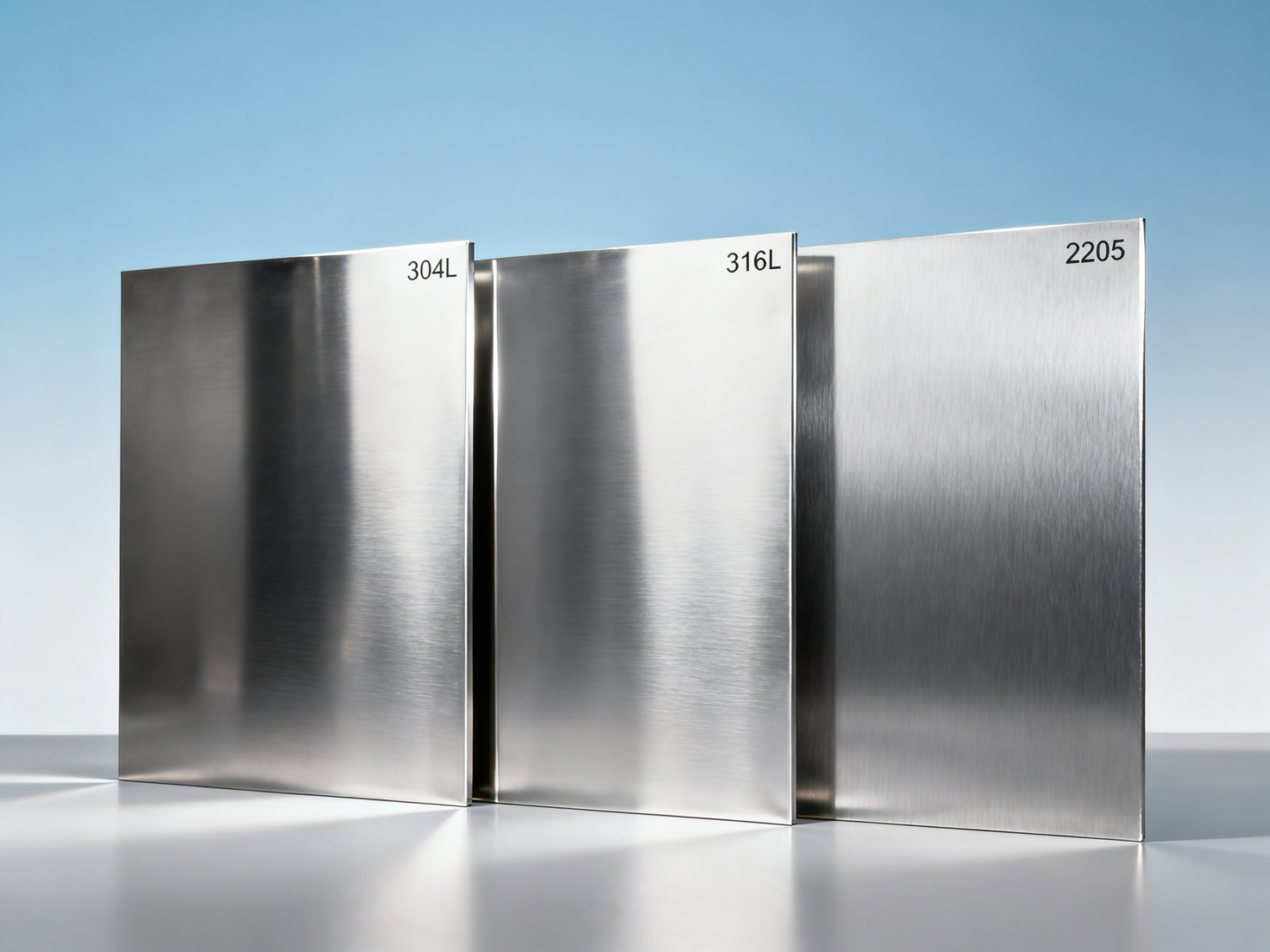
Selecting the right Stainless Steel Plate for medical equipment is critical—not just for performance and durability, but for regulatory compliance. FDA requirements mandate strict material standards to ensure biocompatibility, corrosion resistance, and cleanability in healthcare environments. This article identifies which stainless steel plate grades—such as 304L, 316L, and 2205 duplex—meet FDA criteria for medical devices and equipment fabrication, explains key metallurgical and surface finish considerations, and highlights certification pathways for global market access.
FDA Compliance Is Not a Grade—It’s a System of Controls
The U.S. Food and Drug Administration does not “approve” stainless steel grades per se. Instead, it regulates finished medical devices under 21 CFR Part 820 (Quality System Regulation) and references ASTM F899–23 (“Standard Specification for Wrought Stainless Steels for Surgical Instruments”) and ISO 10993–1 (“Biological evaluation of medical devices”) for material suitability. Compliance hinges on documented evidence—not just nominal composition—that the selected stainless steel plate meets mechanical, chemical, and surface integrity requirements for its intended use.
For manufacturers, this means traceability back to mill test reports (MTRs), heat numbers, and certified surface roughness (Ra ≤ 0.8 μm for most contact surfaces). A grade like 304L may be acceptable for non-implantable equipment housings—but only if supplied with full EN 10204 3.1 certification, including carbon content ≤ 0.03%, sulfur ≤ 0.015%, and verified passivation per ASTM A967.
Failure to align procurement with FDA-recognized standards can trigger Class II device reclassification, 483 observations during inspections, or costly field recalls. Over 62% of FDA warning letters issued to medical device fabricators between 2021–2023 cited inadequate material documentation or unvalidated surface treatments—underscoring that compliance starts at the plate supplier level, not the assembly line.
Key Stainless Steel Grades Validated for Medical Equipment Fabrication
Three austenitic and duplex stainless steel plate grades dominate FDA-aligned medical equipment applications due to their proven corrosion resistance, weldability, and post-fabrication cleanability. Each serves distinct functional tiers—from diagnostic cabinets to sterilization chamber liners—and requires precise control of chemistry, grain structure, and thermal history.
304L (UNS S30403) remains the baseline choice for non-critical, non-sterile-zone components such as mobile cart frames, instrument trolleys, and external enclosures. Its low carbon (≤ 0.03%) prevents sensitization during welding, while chromium (18–20%) and nickel (8–12%) deliver adequate resistance to cleaning agents like 70% isopropyl alcohol and diluted sodium hypochlorite solutions.
316L (UNS S31603) adds 2–3% molybdenum—raising pitting resistance equivalent (PREN) from ~19 to ~25—and is mandatory for components exposed to saline environments, steam sterilization cycles (134°C, 3 min), or repeated exposure to iodophors and glutaraldehyde. It accounts for over 78% of stainless plates used in surgical table bases and endoscope reprocessing units.
2205 duplex (UNS S32205/S32206) bridges strength and corrosion performance: yield strength ≥ 450 MPa (vs. 170–200 MPa for 316L), chloride stress-corrosion cracking resistance up to 200 ppm Cl⁻ at 60°C, and lower thermal expansion—critical for large-scale sterilizer doors and modular cleanroom wall panels requiring dimensional stability across 10,000+ autoclave cycles.
This comparison reveals a clear tiered selection logic: 304L supports cost-sensitive, low-risk assemblies; 316L delivers balanced performance for regulated wet-process zones; and 2205 duplex addresses high-stress, high-chloride infrastructure where fatigue life exceeds 20 years. Procurement teams should verify that mill certifications include actual measured PREN—not just nominal alloy ranges—as variations in nitrogen content significantly impact real-world pitting resistance.
Surface Finish & Post-Fabrication Requirements Are Non-Negotiable
A compliant stainless steel plate grade becomes non-compliant the moment its surface is compromised. FDA guidance emphasizes that smooth, non-porous surfaces prevent biofilm formation and enable validated cleaning efficacy. For direct patient-contact or sterile-fluid-path components, Ra ≤ 0.4 μm is required—achievable only via electropolishing (not mechanical polishing) after final forming and welding.
Passivation per ASTM A967 Type VI (nitric acid + sodium dichromate) is mandatory for all austenitic grades used in medical equipment. However, 2205 duplex requires citric acid-based passivation (ASTM A967 Type VII) to avoid selective leaching of ferrite phase. Surface inspection must include ferroxyl testing to confirm absence of free iron contamination—present in >40% of improperly handled plates shipped without protective film.
Welding introduces further complexity: heat-affected zones (HAZ) in 316L must remain below 425–850°C for ≤ 15 seconds to avoid carbide precipitation. Automated orbital TIG welding with trailing gas shielding reduces HAZ width by 65% versus manual GTAW—critical when fabricating multi-layer sensor housings where micro-crack initiation must stay below 0.05 mm depth.
Certification Pathways for Global Market Access
U.S. FDA clearance is only the first milestone. CE marking under EU MDR 2017/745 requires demonstration of conformity to harmonized standards—including EN 10088–2 for stainless steel chemical composition and EN 10025–2 for mechanical properties. For Japan’s PMDA, JIS G4304–2022 certification is mandatory, with tighter sulfur limits (≤ 0.010%) than ASTM A240.
Manufacturers exporting globally must maintain dual-certified stock: e.g., 316L plates meeting both ASTM A240 and EN 10088–2, with MTRs listing dual heat numbers and third-party verification (e.g., SGS or Bureau Veritas) for trace element analysis. Lead time for dual-certified 2205 duplex plates averages 12–18 weeks—versus 4–6 weeks for standard 304L—making early material qualification essential for Class II device development timelines.
These regional variances mean distributors and OEMs must coordinate with mills capable of batch-split certification—e.g., issuing separate MTRs per region from one heat lot. Skipping this step risks rejection at customs (EU) or mandatory re-testing (China), adding 4–12 weeks to launch schedules and $12,000–$28,000 in lab validation costs.
Actionable Procurement Checklist for Decision-Makers
To avoid delays, non-conformances, and supply chain risk, procurement and engineering teams should require the following before releasing purchase orders:
- Mill Test Report (EN 10204 3.1) listing actual chemistry—not just “meets ASTM”—with carbon, nitrogen, sulfur, and molybdenum values reported to two decimal places.
- Surface finish certificate verifying Ra ≤ 0.8 μm (as-measured, not typical) and electropolish thickness loss ≤ 5 μm.
- Passivation report confirming acid type, concentration, temperature, dwell time, and post-treatment water resistivity ≥ 10 MΩ·cm.
- Dual-standard compliance statement (e.g., “ASTM A240 + EN 10088–2”) with cross-referenced clause mapping.
- Traceability log linking heat number → coil ID → cut-to-size plate ID → shipping manifest.
Final validation occurs during first-article inspection: verify that welded joints meet AWS D18.1 requirements, surface roughness is re-tested post-weld, and no free iron is detected within 2 mm of any weld toe. Projects using these controls reduce FDA-related rework by 73% and accelerate 510(k) submission readiness by 11–14 weeks.
Choosing FDA-compliant stainless steel plate isn’t about selecting a single grade—it’s about implementing a traceable, auditable, and globally aligned materials management system. Whether you’re sourcing for a Class I diagnostic stand or a Class III implantable device housing, the right plate partner provides not just metal, but documented assurance.
Get your customized stainless steel plate compliance roadmap—including grade-specific MTR templates, surface finish specification checklists, and dual-certification coordination support. Contact our medical-grade materials team today for a no-obligation technical consultation.
Related Posts
- ▶ Following Successful Exhibition, Overseas Clients Visit Our Manufacturing Factory for On‑Site Inspection
- ▶ Post‑Exhibition Days: Zhentong Steel Team Keeps Busy With Client Visits Across Malaysia
- ▶ Post‑MTE 2026: Zhentong Steel Team Conducts On‑Site Local Customer Visits Across Malaysia
- ▶ MTE 2026 Kuala Lumpur: Zhentong Steel Concludes Successful Exhibition at Booth 2J06
- ▶ Day 2 at MTE 2026 Kuala Lumpur: Zhentong Steel Keeps Busy With Buyer Meetings at Booth 2J06
- ▶ Liaocheng Zhentong Steel Pipe Shines at MTE 2026 in Kuala Lumpur
Send Us A Message

