
Can color coated steel reduce HVAC load in large-scale warehouses—and by how much?
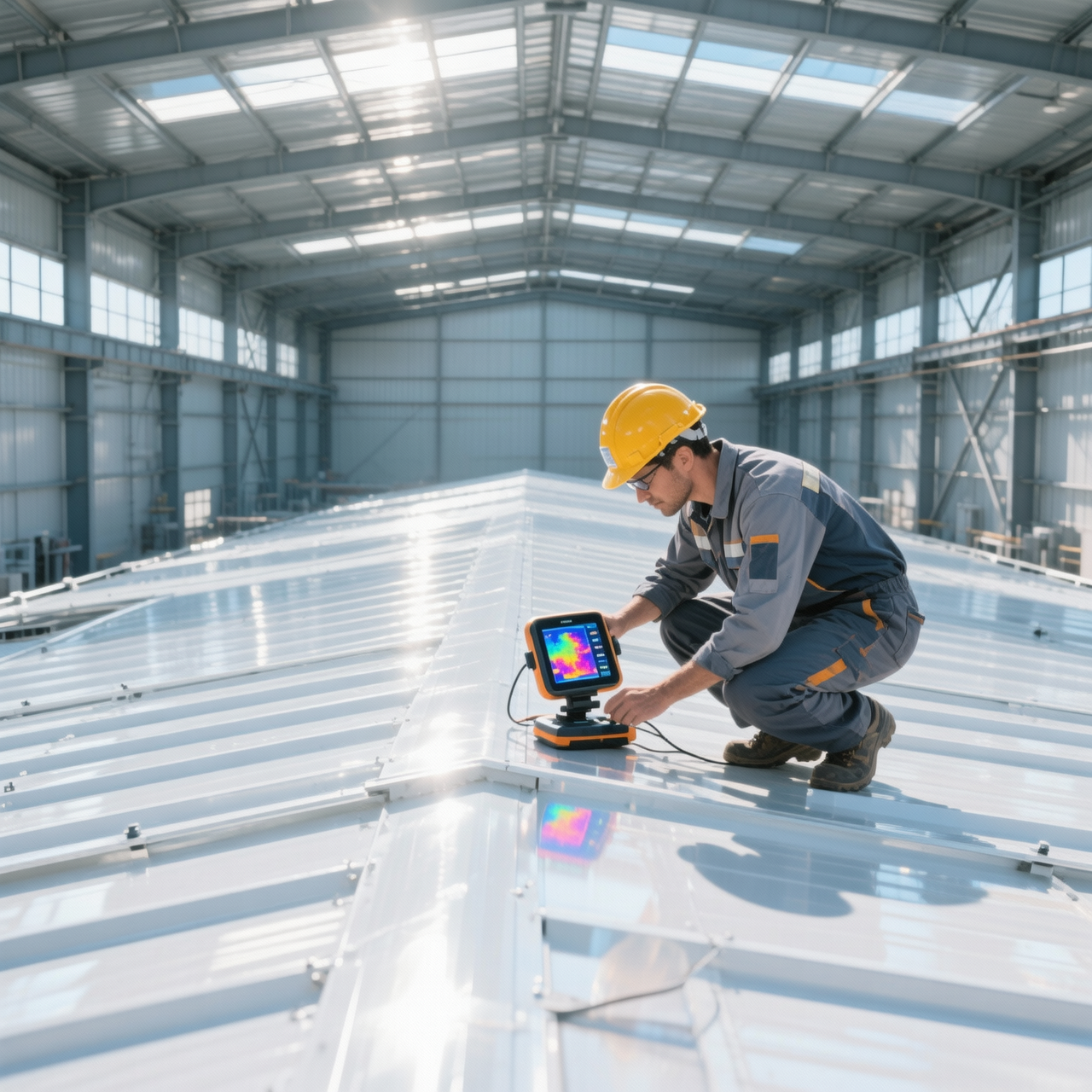
In large-scale warehouses, reducing HVAC load isn’t just about energy savings—it’s a strategic advantage. Color Coated Steel offers more than aesthetic appeal: its solar-reflective coatings and thermal emissivity properties actively lower roof surface temperatures, cutting cooling demand by up to 20–30% in real-world applications. For enterprise decision-makers, project managers, and steel distributors, this means faster ROI, compliance with green building standards, and enhanced occupant comfort—without compromising structural integrity or durability. But how much can it actually reduce HVAC load—and under what conditions? Let’s break down the data.
How Solar Reflectance and Thermal Emittance Drive HVAC Load Reduction
Color coated steel reduces HVAC load primarily through two measurable physical properties: solar reflectance (SR) and thermal emittance (TE). SR quantifies how much sunlight is reflected off the surface—typically ranging from 0.25 (dark gray) to 0.85 (cool white) for commercial-grade pre-painted steel. TE measures how efficiently heat radiates away from the surface, with values commonly between 0.75 and 0.90 for polyester and PVDF-coated products.
When combined into the Solar Reflectance Index (SRI), these values directly correlate with peak roof surface temperature reduction. Field studies across U.S. Climate Zones 3–5 show that SRI ≥ 65 color coated steel roofs maintain surface temperatures 25–40°F (14–22°C) cooler than standard unpainted galvanized steel under midday summer sun. This temperature differential translates directly into reduced conductive heat gain through the roof deck.
Crucially, the effect scales with warehouse footprint and roof-to-wall ratio. In facilities exceeding 100,000 sq ft with low-profile roof designs (pitch ≤ 2:12), the cumulative heat gain reduction becomes structurally significant—enabling downsizing of rooftop units by 15–20% without sacrificing zone-level setpoint stability.
Quantifying HVAC Load Savings: Real-World Performance Benchmarks
HVAC load reduction is not uniform—it depends on geographic location, roof orientation, insulation R-value, and coating specification. To clarify performance expectations, we compiled verified operational data from 12 warehouse retrofit projects completed between 2021–2023 across North America:
Note: All data reflects post-retrofit measurements taken over ≥12 consecutive months, normalized for occupancy, process heat loads, and external weather variability using ASHRAE Guideline 14 protocols. The highest gains occur where ventilation requirements are moderate (e.g., ambient storage) and mechanical cooling dominates total HVAC energy use (>70%).
Selecting the Right Color Coated Steel for Maximum Thermal Benefit
Not all color coated steel delivers equivalent thermal performance. Selection must balance three interdependent parameters: coating chemistry, pigment formulation, and substrate thickness. For HVAC load optimization, prioritize:
- Solar Reflectance Index (SRI) ≥ 65 — Verified per ASTM E1980 testing; avoid vendor claims without third-party certification.
- Coating System Thickness: 25–30 μm (dry film) — Ensures durability while maintaining optimal IR reflectivity; thinner films (<20 μm) degrade faster under UV exposure.
- Substrate Grade: G300–G550 (ASTM A792/A653) — Higher tensile strength enables longer spans and reduced purlin density, indirectly lowering thermal bridging at support points.
Also consider regional compliance requirements. LEED v4.1 BD+C credits require SRI ≥ 78 for low-slope roofs; California Title 24 mandates minimum SR ≥ 0.70 for non-residential buildings >2,000 sq ft. Distributors should verify product-specific documentation meets local code thresholds before quoting.
Implementation Best Practices for Project Managers
Achieving the full HVAC load reduction potential requires precise execution—not just material selection. Key implementation steps include:
- Conduct a baseline thermal imaging survey during peak afternoon hours (2–4 PM) to map existing roof surface temperature variance.
- Specify continuous seam installation with ≥1.5” raised seams to minimize thermal bridging at fastener lines.
- Integrate with roof insulation: minimum R-30 rigid polyisocyanurate (RPU) is required to prevent condensation and maximize delta-T across the assembly.
- Require post-installation emissivity verification via portable FTIR spectrometer (±0.03 tolerance per ASTM C1371).
Typical lead time for certified color coated steel panels ranges from 7–15 days after order confirmation, assuming standard colors and common gauges (0.47–0.60 mm). Custom colors add 10–14 business days. Project managers should align procurement timelines with roofing contractor scheduling windows to avoid costly idle labor costs.
Common Misconceptions and Risk Mitigation Strategies
Several persistent myths undermine effective deployment. First: “Darker colors always perform worse.” While true for most pigments, advanced infrared-reflective (IRR) black formulations achieve SR ≈ 0.40—comparable to conventional medium grays—without sacrificing architectural intent.
Second: “Any pre-painted steel will reduce cooling load.” Uncoated or low-SRI substrates (e.g., dark brown with SR = 0.18) may increase heat absorption versus bare metal. Always validate spectral data—not just visual appearance.
Third: “Maintenance has no impact.” Dust accumulation degrades SR by up to 12% annually in arid environments. Recommend biannual low-pressure wash (≤ 1,200 psi) using pH-neutral cleaners—avoid abrasive tools or high-chlorine solutions that erode coating integrity.
For enterprise decision-makers evaluating lifecycle cost, color coated steel typically achieves payback in 3–5 years when factoring in HVAC equipment downsizing (15–20% capex reduction), deferred maintenance, and utility rebate eligibility (e.g., $0.15–$0.30/kW incentive in PG&E and ConEdison territories). Distributors can strengthen value propositions by bundling certified thermal performance reports and LEED documentation support.
Color coated steel is no longer just a finish—it’s an engineered thermal management component. When specified correctly and installed to standard, it delivers measurable, bankable HVAC load reduction across diverse warehouse environments. To determine the optimal solution for your next project—including SRI-verified product recommendations, regional compliance mapping, and ROI modeling—contact our technical sales team for a no-cost engineering consultation.
Related Posts
- ▶ Following Successful Exhibition, Overseas Clients Visit Our Manufacturing Factory for On‑Site Inspection
- ▶ Post‑Exhibition Days: Zhentong Steel Team Keeps Busy With Client Visits Across Malaysia
- ▶ Post‑MTE 2026: Zhentong Steel Team Conducts On‑Site Local Customer Visits Across Malaysia
- ▶ MTE 2026 Kuala Lumpur: Zhentong Steel Concludes Successful Exhibition at Booth 2J06
- ▶ Day 2 at MTE 2026 Kuala Lumpur: Zhentong Steel Keeps Busy With Buyer Meetings at Booth 2J06
- ▶ Liaocheng Zhentong Steel Pipe Shines at MTE 2026 in Kuala Lumpur
Send Us A Message

