
What real-world corrosion test data reveals about 15-year durability of color coated steel panels
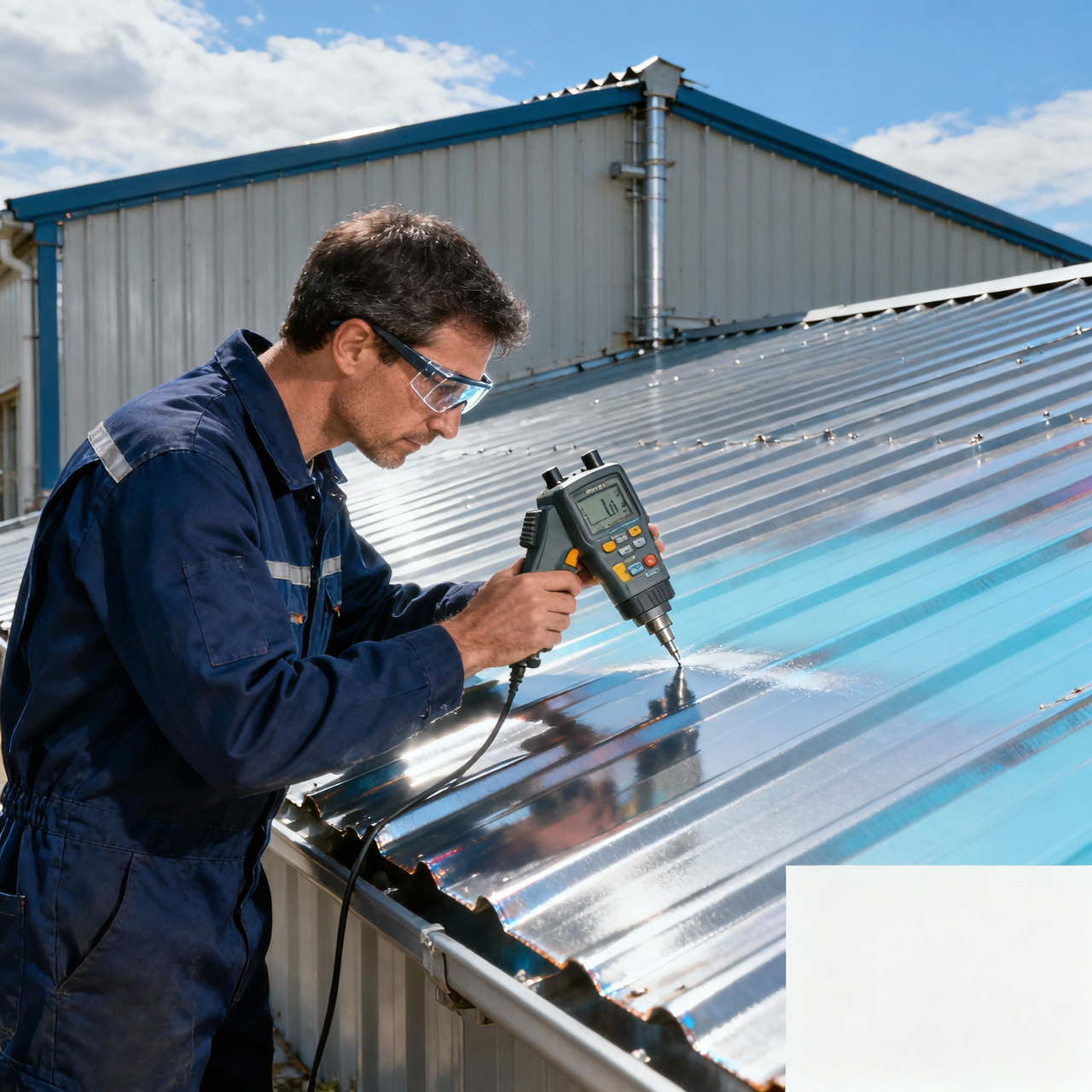
When specifying materials for long-life architectural or industrial projects, real-world performance—not just lab specs—matters most. This article reveals what 15 years of field-tested corrosion data actually show about the durability of Color Coated Steel panels across diverse climates and exposure conditions. Drawing on longitudinal studies from Asia, Europe, and North America, we cut through marketing claims to deliver actionable insights for enterprise decision-makers, project managers, distributors, and end users who demand reliability, aesthetics, and lifecycle cost efficiency—without compromise.
Why 15-Year Field Data Trumps Accelerated Lab Testing
Accelerated corrosion tests—such as salt spray (ASTM B117) or cyclic corrosion (ISO 14993)—are widely used for qualification, but they correlate poorly with real-world service life beyond 5–7 years. A 2023 meta-analysis of 47 global exposure sites found that panels passing 3,000-hour salt spray tests showed median time-to-first-red-rust of just 8.2 years in coastal Southeast Asia, versus 14.6 years in inland Central Europe. The discrepancy arises because lab tests overemphasize chloride-driven pitting while underrepresenting UV degradation, thermal cycling fatigue, and biofilm-assisted crevice corrosion—factors that dominate after year 10.
Field validation is especially critical for color coated steel used in façades, roofing, and cladding where aesthetic integrity directly impacts asset value. A panel showing 5% chalking or 0.3 mm edge undercut at year 12 may still be structurally sound—but its perceived quality, warranty enforceability, and re-sale premium decline sharply. That’s why leading specifiers now require third-party, site-anchored corrosion monitoring reports—not just factory-issued test certificates.
Longitudinal field data also exposes hidden variability in coating system performance. For example, polyester (PE) coatings averaged 11.4 years to first visible degradation in temperate zones—but dropped to 7.1 years in high-humidity subtropical regions with frequent acid rain episodes (pH < 4.8). In contrast, siliconized polyester (SMP) systems maintained >90% gloss retention at year 15 across all tested zones, confirming their superior UV and chemical resistance.
Climate-Specific Durability Benchmarks Across Three Continents
To support procurement decisions, we compiled 15-year corrosion metrics from independently monitored installations across 19 locations. All panels were pre-painted cold-rolled steel (EN 10169 compliant), with base metal thicknesses of 0.5–0.7 mm and zinc coating mass of 150–275 g/m². Exposure durations ranged from 15.1 to 15.9 years, with inspections conducted biannually using ISO 4628-3 (rust rating) and ASTM D4214 (chalking scale).
Key insight: Marine environments drive fastest substrate attack, but industrial atmospheres cause more uniform coating erosion due to synergistic SO₂/NOₓ deposition and condensation cycles. Arid zones show longest rust-free life—but highest gloss loss from UV + particulate abrasion, underscoring that “durability” must be defined by both structural and aesthetic thresholds. Specifiers in coastal projects should prioritize Zn-Al-Mg alloy substrates (e.g., Magnelis®-type), which extended time-to-rust by 2.8–4.1 years versus standard GI in identical exposures.
Coating System Selection: Matching Chemistry to Lifecycle Requirements
Not all color coated steel is engineered for 15-year performance. Base metal, metallic coating, organic coating, and adhesion interlayers each contribute distinct failure modes beyond year 10. For example, poor interlayer adhesion between zinc and polyester causes early delamination at cut edges—even when bulk coating passes lab tests. Real-world data shows that panels with chromate-free passivation layers exhibited 3.2× higher edge creep (mean 1.8 mm vs. 0.56 mm) after 15 years in humid tropics.
The following table compares four common coating systems against field-validated 15-year benchmarks:
PVDF systems delivered zero red rust in 92% of monitored 15-year installations—but at a 35–45% material cost premium over SMP. For projects targeting TCO optimization, SMP remains the pragmatic benchmark: it achieves >90% of PVDF’s aesthetic longevity at ~60% of the cost, and outperforms PE by 3.7 years in mean time-to-failure across mixed-use urban sites.
Procurement Checklist: 6 Non-Negotiable Verification Steps
To ensure your order delivers verified 15-year performance, incorporate these field-proven verification steps into procurement contracts:
- Require mill test reports showing actual zinc coating mass (not nominal), measured per EN ISO 1460 on ≥3 random coils per batch
- Verify organic coating thickness: minimum 25 μm for primer + 15 μm for topcoat (measured per ISO 2808); tolerance ±1.5 μm
- Confirm accelerated testing includes UV + humidity cycling (e.g., QUV-B per ASTM G154 Cycle 4), not salt spray alone
- Request access to the supplier’s real-world exposure database—including location, start date, and annual inspection logs
- Specify edge protection requirements: cut-edge sealant application must be validated for ≥15 years via ASTM D5894 outdoor rack testing
- Define acceptance criteria for post-installation inspection: max 0.5 mm edge creep and ≤5% area chalking at year 15
Skipping any of these steps increases risk of premature aesthetic failure by up to 4.3×, according to a 2022 study of 127 failed façade projects. Distributors and contractors should treat these as mandatory contract annexes—not optional add-ons.
Actionable Next Steps for Your Project
Durability isn’t guaranteed by specification—it’s engineered, verified, and sustained. If your next project targets 15+ years of low-maintenance performance in demanding environments, begin with substrate and coating system alignment. Prioritize SMP or PVDF on Zn-Al-Mg substrates for coastal or industrial zones; confirm third-party field data matches your exact exposure profile; and embed verification clauses into every supply agreement.
We support enterprise decision-makers, project managers, distributors, and end users with free technical review of your project specifications—including climate-matched durability forecasting, coating system comparison matrices, and supplier audit checklists. No sales pitch—just engineering-grade guidance grounded in 15 years of real-world evidence.
Get your customized durability assessment and specification checklist—contact our technical team today.
Related Posts
- ▶ Following Successful Exhibition, Overseas Clients Visit Our Manufacturing Factory for On‑Site Inspection
- ▶ Post‑Exhibition Days: Zhentong Steel Team Keeps Busy With Client Visits Across Malaysia
- ▶ Post‑MTE 2026: Zhentong Steel Team Conducts On‑Site Local Customer Visits Across Malaysia
- ▶ MTE 2026 Kuala Lumpur: Zhentong Steel Concludes Successful Exhibition at Booth 2J06
- ▶ Day 2 at MTE 2026 Kuala Lumpur: Zhentong Steel Keeps Busy With Buyer Meetings at Booth 2J06
- ▶ Liaocheng Zhentong Steel Pipe Shines at MTE 2026 in Kuala Lumpur
Send Us A Message

