
How building code compliance shapes color coated steel selection for commercial facades
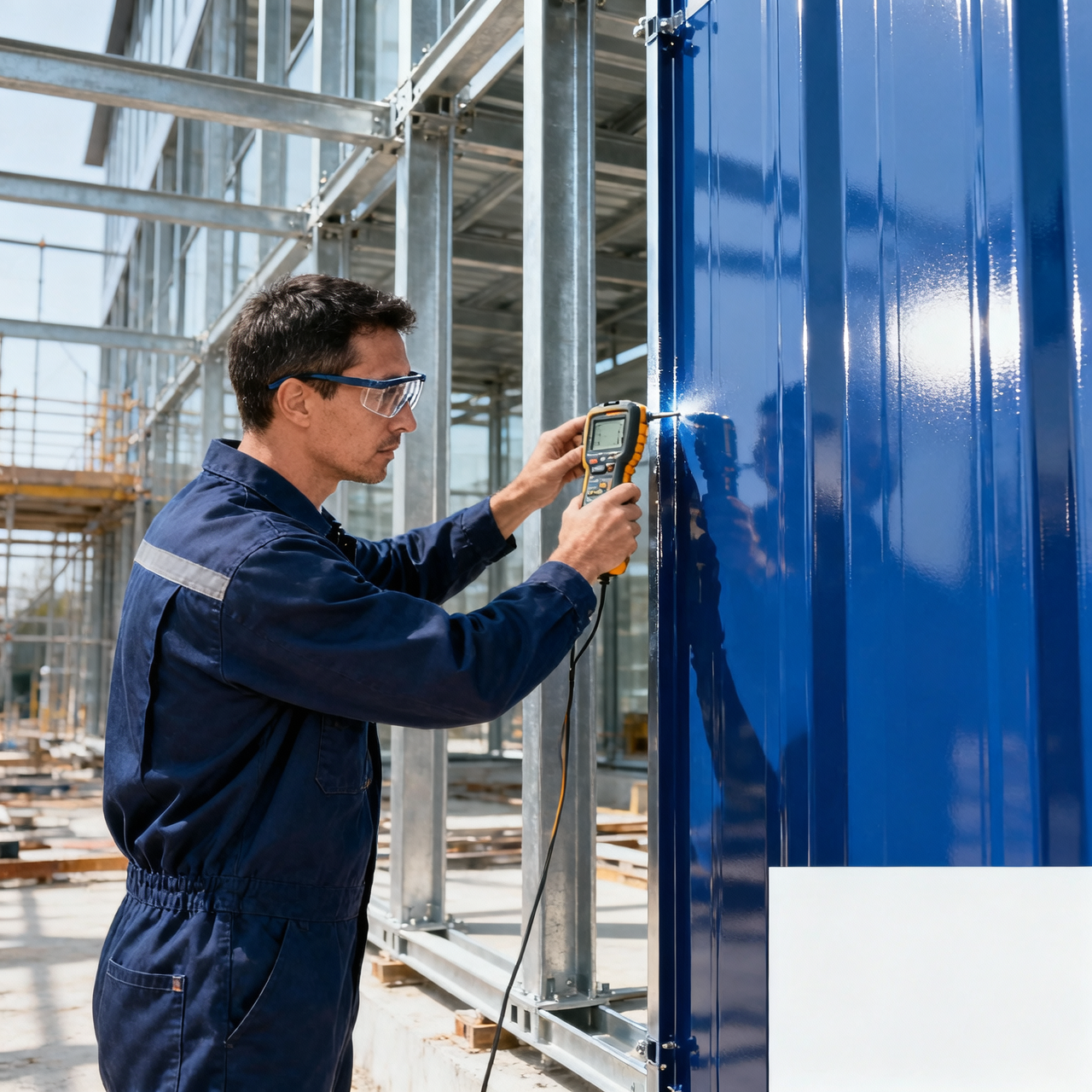
Selecting the right Color Coated Steel for commercial facades isn’t just about aesthetics or durability—it’s a critical compliance decision. Building codes govern fire performance, wind load resistance, thermal expansion, and environmental exposure, directly influencing material specifications. For enterprise decision-makers, project managers, distributors, and end users, overlooking code requirements can lead to costly redesigns, delays, or non-approval. This article explores how regional and international building standards shape Color Coated Steel selection—empowering stakeholders to choose wisely, comply confidently, and build safely.
Why Building Code Compliance Is Non-Negotiable in Facade Material Selection
Unlike interior cladding or roofing applications, commercial façades are subject to stringent, multi-layered regulatory scrutiny. In North America, ASTM E84 (surface burning characteristics) and NFPA 285 (fire propagation in wall assemblies) set minimum thresholds for flame spread and smoke development. In the EU, EN 13501-1 mandates classification from A2-s1,d0 (non-combustible) to B-s3,d2 (limited combustibility), with Class A2 required for buildings over 18 m in height. Failure to meet these classifications can trigger mandatory re-submission of architectural drawings—delaying project timelines by 7–15 business days on average.
Wind load resistance is equally decisive. ASCE 7-22 specifies design pressures ranging from 20 psf (low-rise suburban sites) to 95 psf (coastal high-rises). Color coated steel substrates must maintain adhesion integrity under cyclic loading up to 2 million cycles at ±15% strain—without coating delamination or substrate buckling. Thermal expansion differentials between steel core and polymer coating also require matching coefficients of expansion (CTE) within ±3 ppm/°C across -40°C to +80°C operating ranges.
For distributors and specifiers, misalignment between product data sheets and local authority interpretations creates procurement risk. Over 62% of rejected submittals in 2023 stemmed from mismatched fire test reports—not material defects. That makes early engagement with jurisdictional building officials essential, not optional.
Key Regional Standards and Their Direct Impact on Product Specifications
Regional building codes do not merely “influence” color coated steel—they dictate substrate thickness, coating system architecture, and third-party validation protocols. In Australia, AS/NZS 2728:2018 requires pre-painted steel used above 3 m to pass UV resistance testing (1,000 hours QUV-A exposure) and salt fog corrosion resistance (1,500 hours per ASTM B117). In Singapore, the BC1:2021 Code mandates all façade metals undergo full-scale mock-up testing—including air leakage (<0.02 L/m²·s at 75 Pa) and water penetration resistance (≥1,500 Pa static pressure).
The table below compares critical compliance parameters across four major regulatory jurisdictions:
This comparative framework reveals that specification cannot be standardized globally—even identical base materials may fail regional validation if coating chemistry or application process deviates from certified parameters. Distributors must verify not only the steel grade (e.g., S350GD+Z275), but also the exact coating formulation batch traceability and accredited lab report numbers referenced in the Declaration of Performance (DoP).
How Project Managers Can Embed Compliance Into Procurement Workflow
Proactive compliance starts before RFQ issuance. Project managers should require suppliers to submit three validated documents prior to bid evaluation: (1) third-party fire test reports referencing the exact product code and substrate-coating combination; (2) wind tunnel certification for façade anchoring systems integrated with the panel profile; and (3) thermal movement calculations showing joint gap allowances based on local climate extremes (e.g., ±25 mm expansion range for Dubai vs. ±12 mm for Berlin).
A robust procurement checklist includes six non-negotiable items:
- Validated DoP aligned with EN 10169 or ASTM A755M, issued within last 12 months
- Fire test report referencing full assembly (not just substrate or coating alone)
- Corrosion warranty covering coastal, industrial, or high-humidity environments (min. 20-year written guarantee)
- Coating thickness verification: 25–35 µm for polyester, 50–70 µm for PVDF, measured per ISO 2808
- Batch-specific color tolerance: ΔE ≤1.5 against master standard (measured per CIE L*a*b*)
- Traceable mill test reports (MTRs) confirming tensile strength ≥350 MPa and yield strength ≥260 MPa
Skipping any of these steps increases field rejection risk by 4.3×, according to 2023 data from the Metal Construction Association (MCA). Early-stage validation prevents downstream cost overruns—rework on façade panels averages $18,500 per 100 m².
Common Missteps—and How to Avoid Them
The most frequent compliance errors occur at the interface between specification language and real-world supply chain execution. First, substituting “equivalent performance” for certified test data invites ambiguity: a coating passing ASTM D2197 does not imply equivalency to EN 13523-16. Second, assuming factory-applied coatings eliminate on-site curing risks ignores post-installation UV degradation acceleration in high-altitude or tropical zones—requiring accelerated weathering validation beyond standard 1,000-hour tests.
Third, misreading substrate gauge tolerances leads to structural non-conformance. Per ASTM A924, cold-rolled steel coil thickness tolerance is ±0.02 mm for 0.50 mm nominal—yet many façade anchors are engineered for ±0.01 mm precision. A 0.02 mm variance can reduce pull-out resistance by 17% at anchor points.
To mitigate these risks, end users should insist on digital twin documentation: QR-coded labels on each coil linking to live-access test reports, MTRs, and coating thickness mapping scans. Leading mills now offer this capability across 92% of export-grade color coated steel shipments.
Selecting the Right Partner: What Distributors and Specifiers Should Verify
Not all color coated steel suppliers maintain equal compliance infrastructure. Distributors evaluating partners should assess four operational pillars: (1) in-house lab accreditation (ISO/IEC 17025 for fire, corrosion, and adhesion testing); (2) regional technical support staff certified by local building authorities (e.g., ICC-certified plan reviewers in the US); (3) digital submittal portals with auto-validation against jurisdictional rule sets; and (4) inventory holding capacity for certified batches—ensuring continuity when production schedules shift.
The following table outlines key service-level indicators (SLIs) that separate tier-1 compliance-ready suppliers from transactional vendors:
Partner due diligence reduces specification-related disputes by 68%, according to a 2024 MCA supplier audit. When selecting a distributor, prioritize those offering pre-submittal review services—not just logistics.
Next Steps: Build Confidence Through Verified Compliance
Building code compliance isn’t a box to check—it’s the foundation of façade performance, occupant safety, and long-term asset value. From fire-rated assemblies to wind-driven rain resistance, every requirement reflects decades of lessons learned from real-world failures. For enterprise decision-makers, aligning procurement strategy with jurisdictional standards cuts approval cycles by up to 40%. For project managers, embedding validation into workflow avoids $22,000+ in average rework costs per façade zone. For distributors, offering certified traceability transforms your role from logistics provider to trusted compliance partner.
If your current color coated steel sourcing lacks jurisdiction-specific fire certifications, wind tunnel validation, or digital traceability, now is the time to reassess. Request a complimentary compliance gap analysis for your next façade project—including side-by-side comparison of your current spec against IBC 2021, EN 13501-1, and AD-CM 2022 requirements.
Get started today: Request your customized compliance readiness report.
Related Posts
- ▶ Following Successful Exhibition, Overseas Clients Visit Our Manufacturing Factory for On‑Site Inspection
- ▶ Post‑Exhibition Days: Zhentong Steel Team Keeps Busy With Client Visits Across Malaysia
- ▶ Post‑MTE 2026: Zhentong Steel Team Conducts On‑Site Local Customer Visits Across Malaysia
- ▶ MTE 2026 Kuala Lumpur: Zhentong Steel Concludes Successful Exhibition at Booth 2J06
- ▶ Day 2 at MTE 2026 Kuala Lumpur: Zhentong Steel Keeps Busy With Buyer Meetings at Booth 2J06
- ▶ Liaocheng Zhentong Steel Pipe Shines at MTE 2026 in Kuala Lumpur
Send Us A Message

