
Carbon Steel Coil Price Volatility in 2026: Three Key Supply Chain Factors Procurement Managers Must Monitor
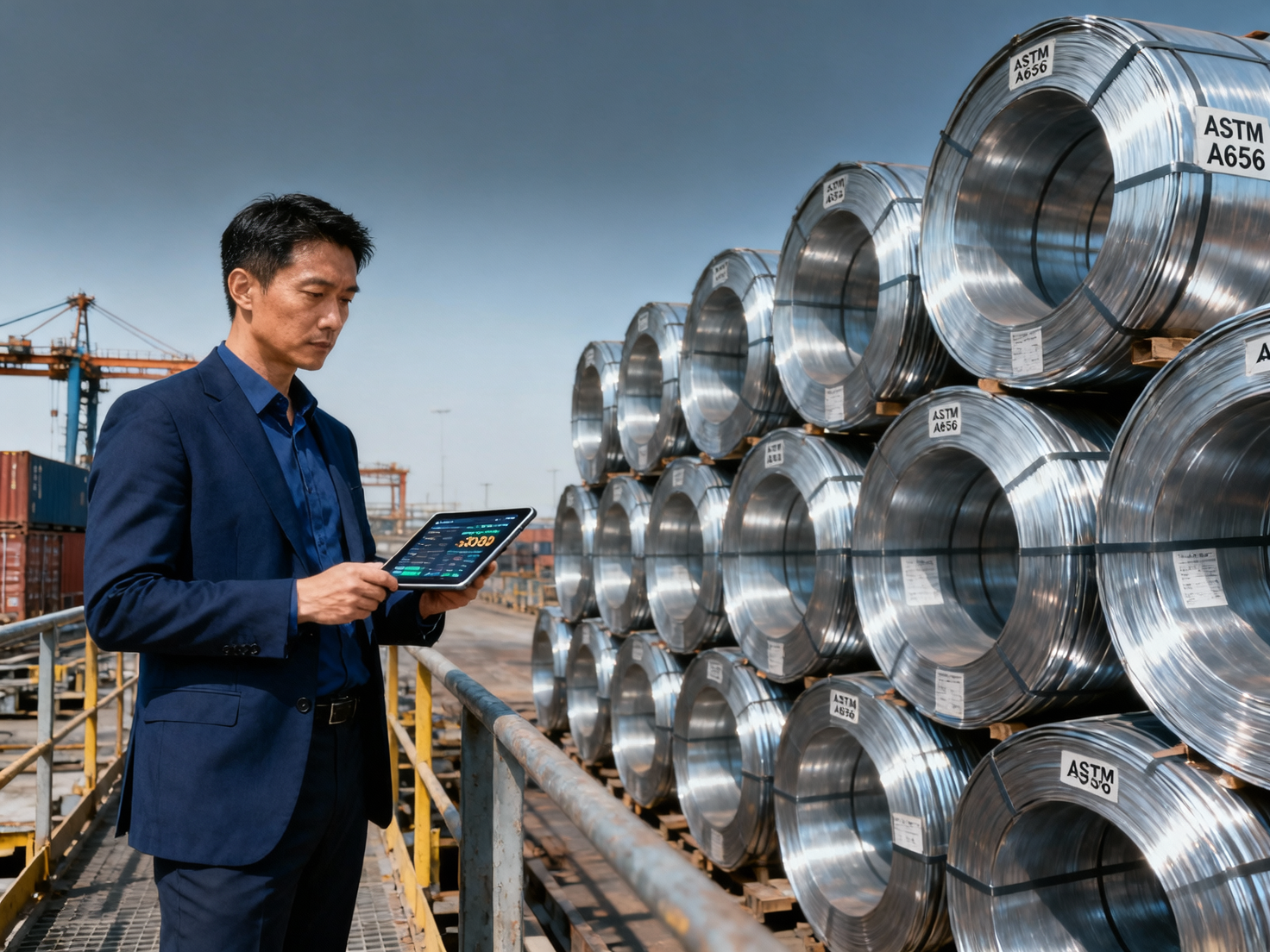
Carbon Steel Coil price volatility in 2026 is poised to challenge procurement strategies across global manufacturing and construction sectors. Driven by tightening raw material supplies, geopolitical trade shifts, and accelerating decarbonization mandates, pricing uncertainty is no longer episodic—it’s structural. For procurement managers, project leaders, and supply chain decision-makers, anticipating these fluctuations isn’t optional; it’s mission-critical. This article identifies the three most consequential supply chain factors shaping Carbon Steel Coil markets this year—offering actionable insights to hedge risk, secure stable sourcing, and maintain cost control without compromising quality or compliance.
1. Iron Ore Supply Constraints & Regional Production Shifts
Iron ore remains the foundational input for carbon steel coil production—accounting for approximately 35–45% of raw material cost in blast furnace routes. In 2026, global iron ore supply faces dual pressure: declining high-grade ore reserves in Australia and Brazil (down 8–12% YoY in mineable grade consistency), and stricter environmental licensing in key African exporting nations like Liberia and Sierra Leone. These constraints have pushed average seaborne iron ore freight-adjusted landed costs up by 14–19% since Q4 2024.
Simultaneously, regional production capacity is rebalancing. China’s domestic crude steel output cap remains at 1.02 billion tonnes for 2026, with ~17% of its integrated mills undergoing EAF conversion—reducing reliance on imported ore but increasing scrap demand and price sensitivity. Meanwhile, India’s steel output is projected to grow 6.2% YoY, yet its domestic iron ore export restrictions (capping overseas shipments at 35 million tonnes annually) are amplifying intra-Asian price divergence.
For procurement teams, this means localized benchmarking is now essential. A coil sourced from a Korean mill using Australian fines may carry a 5–7% premium over a Vietnamese supplier blending Indian and domestic ore—despite identical ASTM A656 Grade 80 specifications. Lead times also vary: mills with secured long-term ore contracts report 2–4 week order-to-shipment windows, while spot-dependent producers face 6–9 week delays during Q2 monsoon disruptions.
The table above underscores that ore-related volatility is not uniform—it cascades differently based on geography, furnace type, and contract structure. Procurement managers should prioritize mills disclosing full ore sourcing transparency (including mine origin, grade variance history, and transport leg emissions) and require quarterly ore cost pass-through clauses capped at ±2.5%—not open-ended indexation.
2. Energy Cost Volatility & Decarbonization Compliance Timelines
Energy accounts for 22–30% of hot-rolled carbon steel coil production cost—and in 2026, energy prices remain tightly coupled to both policy enforcement and grid infrastructure readiness. The EU’s Carbon Border Adjustment Mechanism (CBAM) Phase II now covers steel imports, imposing €98–€112/tonne CO₂-equivalent charges on non-compliant suppliers. Meanwhile, U.S. IRA tax credits for green steel projects require verified Scope 1+2 emissions ≤1.45 tCO₂e/tonne of crude steel—a threshold only 11% of current global capacity meets.
Natural gas price swings further compound risk. European mills reliant on gas-fired reheat furnaces saw spot gas prices spike 37% in February 2026 following Nord Stream maintenance delays—directly inflating coil processing margins by 4.3–6.1%. In contrast, Chinese mills using coal-based heating face rising carbon tax liabilities under its national ETS, adding ¥18–¥23/tonne to delivered cost for coils shipped post-March 2026.
Critically, compliance timelines are accelerating. By July 2026, all ISO 50001-certified mills must publicly disclose energy intensity (GJ/tonne) and decarbonization roadmaps. Non-disclosing suppliers risk exclusion from Tier-1 automotive and infrastructure tenders—where 73% of RFPs now include mandatory environmental data fields.
- Verify mill-level energy source breakdown (coal/gas/electricity %) and 12-month price hedging coverage
- Require CBAM/IRA compliance documentation prior to PO issuance—not after shipment
- Prefer suppliers with ≥2-year track record of verified emissions reporting (e.g., CDP, EcoVadis Level 3+)
- Build dual-sourcing corridors: one low-carbon (EU/US-based EAF), one cost-optimized (SE Asia BF with certified offsets)
3. Logistics Fragmentation & Trade Policy Realignment
Ocean freight rates for steel coils remain 2.8× pre-pandemic averages, driven by Red Sea rerouting (adding 12–18 days transit time), Panama Canal draft restrictions (limiting vessel loads to 85% capacity), and port congestion in Rotterdam and Houston. As of Q1 2026, average FAK rates for 20’ HC containers carrying 22–25 metric tonnes of cold-rolled carbon steel coil stand at $2,450–$3,100—up 17% YoY.
More structurally impactful is the proliferation of bilateral trade instruments. The U.S.-Japan Steel Agreement now mandates 70% domestic content for “originated” coils used in DoD projects—disrupting traditional Japanese mill → U.S. distributor → OEM flows. Similarly, ASEAN’s new Preferential Steel Arrangement grants 0% tariffs only if final slitting, temper rolling, or surface treatment occurs within member states—forcing buyers to re-evaluate whether to import coils or finished slit strips.
Lead time reliability has deteriorated: only 58% of coil shipments met contractual delivery dates in Q4 2025 (per Clarkson Research data), down from 79% in 2023. This makes safety stock planning more complex—especially when coil widths exceed 1,500 mm (requiring specialized flat-rack vessels) or tensile strength exceeds 450 MPa (triggering additional classification society certifications).
The second table highlights how logistics risks are no longer just about cost—they’re about enforceability and timing. Procurement teams must shift from “lowest landed cost” to “lowest *predictable* landed cost.” That means embedding minimum service-level agreements (SLAs) into contracts: e.g., “≤3% deviation from scheduled arrival window” or “penalty of 0.8% of PO value per day beyond 5-day grace period.”
Strategic Procurement Actions for 2026
To navigate this triad of structural volatility, forward-looking procurement teams are adopting three concrete practices:
- Adopt tiered contracting: Reserve 40–50% volume under fixed-price, 12-month agreements with audited suppliers; allocate 25–30% to indexed contracts tied to published IODEX or TSI indices (with ±3% collars); hold 20% as spot-buy flexibility.
- Implement coil-specific risk scoring: Score each supplier on ore traceability (0–10 pts), energy disclosure completeness (0–10), and logistics SLA adherence history (0–10). Only engage suppliers scoring ≥24/30.
- Co-locate quality assurance: Deploy on-site metallurgical engineers for coil lot acceptance at mill gates—not just at destination ports—to reduce rejection risk and avoid costly air-freighted replacements (which cost 4.2× ocean freight per tonne).
Carbon steel coil is no longer a commoditized input—it’s a strategic risk vector. The procurement managers who treat it as such will secure continuity, contain cost escalation, and strengthen supplier resilience across their entire value chain.
If your organization sources over 5,000 tonnes of carbon steel coil annually, request our 2026 Coil Sourcing Risk Assessment Toolkit—including live index dashboards, supplier compliance scorecards, and scenario-based cost modeling templates. Contact our materials procurement advisory team today to schedule a customized benchmark review.
Related Posts
- ▶ Following Successful Exhibition, Overseas Clients Visit Our Manufacturing Factory for On‑Site Inspection
- ▶ Post‑Exhibition Days: Zhentong Steel Team Keeps Busy With Client Visits Across Malaysia
- ▶ Post‑MTE 2026: Zhentong Steel Team Conducts On‑Site Local Customer Visits Across Malaysia
- ▶ MTE 2026 Kuala Lumpur: Zhentong Steel Concludes Successful Exhibition at Booth 2J06
- ▶ Day 2 at MTE 2026 Kuala Lumpur: Zhentong Steel Keeps Busy With Buyer Meetings at Booth 2J06
- ▶ Liaocheng Zhentong Steel Pipe Shines at MTE 2026 in Kuala Lumpur
Send Us A Message

