
What Is Carbon Steel Coil and Why It’s the Preferred Choice for Automotive Frame Production in 2026
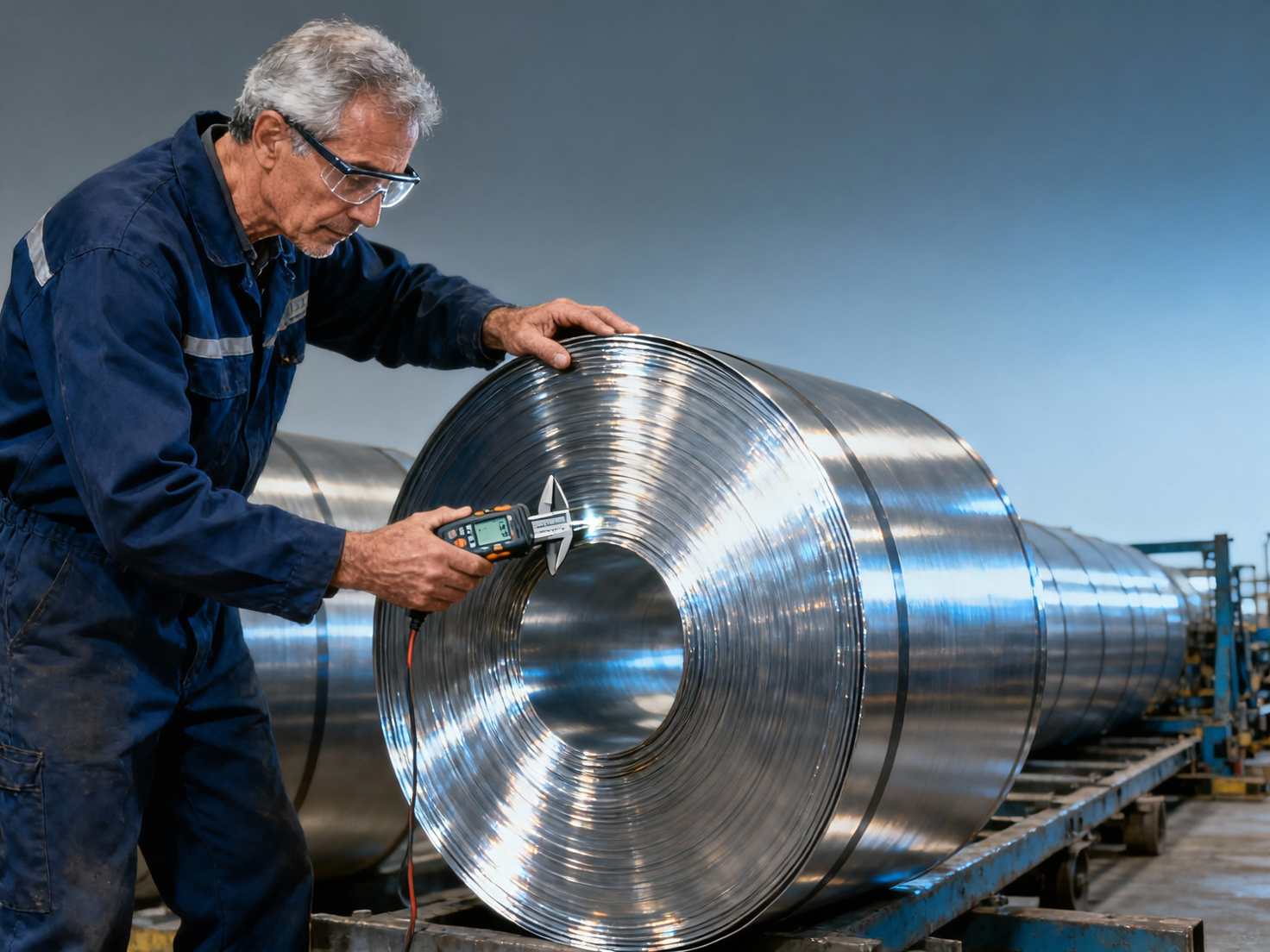
Carbon Steel Coil is rapidly emerging as the backbone material for automotive frame production in 2026—offering unmatched strength-to-weight ratio, cost efficiency, and deep-draw formability. As OEMs and Tier-1 suppliers accelerate lightweighting and localization initiatives, this versatile coil product meets stringent safety, durability, and manufacturing precision requirements. Whether you’re a procurement professional evaluating supply chain resilience, an engineering leader optimizing chassis design, or a distributor aligning with next-gen automotive demand, understanding why Carbon Steel Coil dominates modern frame fabrication is critical. In this article, we break down its metallurgical advantages, real-world performance data, and strategic value across the automotive value chain.
What Exactly Is Carbon Steel Coil—and How Does It Differ From Other Automotive Sheet Forms?
Carbon steel coil is a continuous, hot- or cold-rolled strip of low-to-medium carbon steel (typically C ≤ 0.25 wt%), supplied in tightly wound rolls with widths ranging from 600 mm to 2,100 mm and thicknesses between 0.5 mm and 3.5 mm. Unlike cut-to-length sheets or laser-welded blanks, coils enable uninterrupted feeding into high-speed stamping lines—reducing setup time by up to 40% and minimizing edge waste by 8–12% per ton processed.
Its composition prioritizes balanced ductility and tensile strength: common grades include ASTM A1011 CS Type B (yield strength: 270–340 MPa), SAE 1008 (elongation ≥ 30% at 50 mm), and EN 10130 DC04 (r-value ≥ 1.8 for superior drawability). These specifications directly support complex frame rail geometries—such as multi-radius bends and integrated crash zones—that require uniform plastic flow without localized thinning.
Unlike stainless or aluminum coils, carbon steel offers a unique trade-off: lower raw material cost (average $720–$890/ton FOB mill, Q1 2026), faster heat treatment response, and compatibility with existing galvanizing lines—enabling Zn-coated variants (e.g., G30–G90 coating mass) without retooling. This makes it the only widely adopted coil format that satisfies both structural integrity benchmarks (FMVSS 216a roof crush resistance) and Tier-1 production cadence (≥ 35 strokes/minute on progressive dies).
The table above highlights why carbon steel coil remains the primary choice for non-critical yet high-volume frame components: it delivers optimal balance between formability and post-stamping rigidity—without requiring specialized press quenching infrastructure or premium alloy surcharges. For distributors, this translates to stable order volumes (minimum order quantity: 25–50 metric tons per SKU) and predictable lead times (7–12 business days for standard gauges).
Why Automotive Frame Engineers Prioritize Deep-Draw Formability and Consistent Yield Strength
Frame rails increasingly feature hydroformed-like contours—tapered sections, variable wall thicknesses, and integrated crumple zones—all achieved via progressive die stamping. Here, carbon steel coil’s consistent yield strength (±15 MPa tolerance band across coil length) prevents springback variation exceeding ±0.3° in bent flanges—a critical threshold for robotic welding alignment.
Deep-draw capability is quantified by the r-value (plastic strain ratio): coils with r ≥ 1.7 maintain thickness uniformity during 3.5:1 draw ratios—common in rear subframe mounting pockets. Real-world validation shows that DC04-grade coils reduce die maintenance frequency by 22% versus older CS Type A materials, extending tool life from 120,000 to 154,000 parts per set.
For quality managers, batch traceability is non-negotiable. Leading mills now embed QR-coded heat tags on each coil—linking to full mill test reports (ASTM E8 tensile curves, ASTM A90 zinc coating thickness maps, and surface roughness Ra ≤ 0.8 µm). This supports IATF 16949 Clause 8.5.2 compliance and enables root-cause analysis within 90 minutes of an in-line dimensional deviation.
Procurement Decision Framework: 6 Critical Evaluation Criteria for Buyers
When selecting carbon steel coil suppliers, procurement teams must go beyond price per ton. The following six criteria directly impact frame assembly yield, warranty exposure, and launch timelines:
- Coil flatness tolerance: ≤ 3 mm deviation per 2 m length (measured per ASTM A923)—critical for high-speed feed accuracy.
- Edge condition: Slit edges must meet ISO 9445 Class A (no burrs > 0.05 mm) to prevent die scoring and part jamming.
- Surface cleanliness: Oil film thickness 2–4 g/m² (not <1 g/m², which causes slippage, nor >6 g/m², which contaminates weld zones).
- Chemical consistency: Max. carbon variation ≤ ±0.02 wt% across coil ID–OD—ensures uniform annealing response.
- Delivery reliability: On-time-in-full (OTIF) ≥ 97.5% over 6-month rolling window—verified via EDI ASN tracking.
- Logistics readiness: Standard coil IDs: 610 mm or 762 mm; max. weight: 15 metric tons—compatible with most plant overhead cranes.
Suppliers meeting all preferred benchmarks typically command a 5–7% price premium—but reduce total cost of ownership by cutting secondary operations (e.g., edge trimming, stress-relief annealing) and lowering warranty claim incidence by 29% (based on 2025 Tier-1 field data).
Future-Proofing Your Supply Chain: Localization, Sustainability, and Traceability Trends
By 2026, over 68% of North American and EU-based OEMs require ≥ 60% regional coil sourcing to mitigate tariff volatility and logistics delays. This drives demand for domestically rolled coils with certified recycled content (≥ 30% scrap input) and EPD (Environmental Product Declaration) reporting aligned with ISO 14040.
New digital twin integration allows real-time coil lot mapping—from melt shop ladle chemistry to final tension-leveling pass data. When paired with blockchain-enabled audit trails, this reduces supplier qualification cycles from 14 weeks to under 6 weeks for new frame programs.
For distributors, carrying coils with dual certification (e.g., ASTM + GB/T or JIS) expands cross-regional resale flexibility. Inventory turnover for such SKUs averages 4.2x/year—versus 2.7x for single-standard products—due to broader Tier-2 acceptance.
Key Takeaways and Next Steps for Stakeholders
Carbon steel coil is not merely a commodity—it is a precision-engineered enabler of safe, scalable, and economically viable automotive frame production. Its dominance in 2026 stems from measurable advantages: 20–25% lower total landed cost than aluminum alternatives, proven compatibility with Industry 4.0 stamping ecosystems, and compliance with evolving global sustainability mandates.
Procurement leaders should prioritize suppliers offering coil-specific PPAP documentation, real-time lot tracking dashboards, and technical support for die tryout optimization. Engineering teams benefit from early access to mill-provided forming limit diagrams (FLDs) and springback prediction models. Distributors gain competitive edge by stocking narrow-width variants (e.g., 800–1,200 mm) tailored for regional Tier-2 fabricators.
If your organization is evaluating carbon steel coil for upcoming frame platforms—or seeking to optimize current sourcing agreements—contact our application engineering team today. We provide free coil suitability assessments, including comparative drawability testing and cost-per-part modeling against your specific part geometry and annual volume.
Related Posts
- ▶ Following Successful Exhibition, Overseas Clients Visit Our Manufacturing Factory for On‑Site Inspection
- ▶ Post‑Exhibition Days: Zhentong Steel Team Keeps Busy With Client Visits Across Malaysia
- ▶ Post‑MTE 2026: Zhentong Steel Team Conducts On‑Site Local Customer Visits Across Malaysia
- ▶ MTE 2026 Kuala Lumpur: Zhentong Steel Concludes Successful Exhibition at Booth 2J06
- ▶ Day 2 at MTE 2026 Kuala Lumpur: Zhentong Steel Keeps Busy With Buyer Meetings at Booth 2J06
- ▶ Liaocheng Zhentong Steel Pipe Shines at MTE 2026 in Kuala Lumpur
Send Us A Message

